
“Why 1989?” someone out there might be asking, possibly to me. “Why not!” I say to you, directly. The opportunity to watch My Left Foot with a friend several weeks didn’t demand I do this, but as someone with minimal access to new releases through press and festival accreditation, spring and summer are best spent catching up on old films and assigning myself projects that may or may not go anywhere. But as they say, the difference between science and shenanigans is whether you’ve got a clipboard to record your findings, so here I am to talk about the 1989 Supporting Actress lineup and a handful of unnominated performances worthy of attention.
Oscar’s Lineup

Brenda Fricker, My Left Foot – A tremendous feat of selfless, confident understatement. Perhaps the best trait of Fricker’s playing is how she makes Mrs. Brown’s capability and warmth register as wholly innate qualities, without ever being reducible to a maternal archetype. She makes Ma’s practical, unfussy skill at homemaking into a key character point, while conspiring with Sheridan’s camera not to heavily telegraph this fact. Neither unduly expressive or withholding, Fricker shades relief, pride, protectiveness, and exhaustion so marvelously in her face and bearing. There’s so much of her performance delivered while doing chores, nursing her own curiosities and concerns while addressing her brood’s needs. She’s able to tend her whole family, not just Christy, though it’s Ma’s who first understands the work it will take to nurture him. I simply don’t believe Day-Lewis’s performance would truuly land without Fricker and the rest of this talented cast to balance him out. ★★★★

Anjelica Huston, Enemies, a Love Story – A subtle, ingratiating performance. Yes, the accent’s wobbly, but it’s the same Eastern European Lady voice I use for DND, so Huston gets a pass. I’m less generous towards Huston’s more demonstrative displays of emotion. Perhaps Huston thinks the scale of Tamara’s grief over her dead family demands harsher notes compared to the casual blending of moods and tones her work is otherwise defined by. Which is a completely fair take, though I’m much more interested in the sly, uncanny woman Huston constructs when she’s chatting up her ex(?) husband about his new life, looking embarrassed in front of unexpected guests, and offering to manage him in a crummy diner. Watching the actress and the character build this glamorous persona as a survival tactic is no easy feat. Huston’s brains and handsomeness are ideally utilized, and she finds a peculiar, amused irony to Tamara’s very existence. Great at uncanny entrances and exits. ★★★

Lena Olin, Enemies, a Love Story – Roots her characterization in Masha’s mordant depression. It’s all in her face during sex, the way she’s in a completely different world when. by all rights, she should be relishing in Herman’s undivided attention. All Masha seems to want from America is security – a man to take care of her and her mother, a roof over their heads, good times in nice clothes. Even her ’40s star persona registers as integral to this new identity. Where Tamara and Yadwiga are constructing the armor that will keep them alive in this new world, Masha is testing hers, and it might kill her. Olin knows this. For all the emotional heft Olin puts into Masha’s tempestuous furies, her covetousness of Herman, her coquettish joy on good days, she also plays these notes with precision. She’s a watchful, internalized presence, quick on her feet in a tight corner, and less obviously performative despite her ferocity. Olin lingers with you. ★★★★

Julia Roberts, Steel Magnolias – In her breakthrough film performance, Roberts is about as endearing as you could ask of a headstrong, happy young woman who wants to start a family against all better reason. Even without knowing the stories of director Herbert Ross’s disdain for Julia’s casting and acting ability, you can see Ross hanging her anxiety and greenness out to dry rather than attempting to meaningfully folding it into her characterization. Still, she interacts beautifully with her costars, especially Sally Field. Her control over Shelby’s medical episodes is so assured, from her early diabetic attack all the way to her stumble on the porch. In short, Roberts delivers humane, moving work, not without its shortfalls, but very much signaling the star to come. ★★★

Dianne Wiest, Parenthood – I can be finnicky about the lead/supporting line with major ensemble roles like Wiest’s, even in films with as much going on as Parenthood. Is she really in less of the film than Martin or Robards, despite being so central to her storyline? But maybe the real reason is because Wiest elevates Parenthood more than almost anyone else onscreen. Yes, she’s gifted with some of the best plotting, and unquestionably the best co-stars to play her kids. Still, it’s Wiest who blends sitcommy zing and emotional truths so authentically in her character’s strained relationships. I love her smile as she boils over her daughter’s photographs (“This one is my favorite!”), capping the scene with confusion and concern after the kid storms out. She also evokes the most mature, complex emotions though her relationship with baby Joaquin Phoenix. The disappointing phone call they share, and their candid discussion at the racetrack, are two of the best scenes to be found anywhere in Parenthood. ★★★
No complaints here, obviously. I still can’t decide whether I’d vote for Fricker or Olin, and the other three women all contribute fabulous, awards-worthy performances. But now it’s time for the also-rans, the never-weres, the devious dames who deserve deliverance. Here are fifteen performers and two ensembles worthy of consideration.
Alternate Options

Maria Conchita Alonso, Vampire’s Kiss – Provides a stark, discordantly real contrast to the film around her. Nic Cage’s ingenious, cartoony garishness warps Vampire’s Kiss from a mid-level vampire flick into a pretty deranged study of solipsistic yuppie inhumanity. Alonso, playing Cage’s secretary and the most prominent, sympathetic victim of his abuse, matches his unreality by going hard in the opposite direction. She plays Alva’s humiliation with such genuine, grounded emotion we’re forced to reckon with the human fact of her suffering even when Cage’s theatrics are at their most entertaining. Frankly, Alonso clashes so wildly I feel like she’s half stranded from the rest of Vampire’s Kiss just by taking this approach, yet her frisson with Cage is so central to what makes the film interesting. I respect the hell out of it. ★★★

Fairuza Balk, Valmont – Where Bening and Firth cloak their star turns in layers of seductive duplicity, Balk has to play her sheltered, barely-teenaged society lady with incredible transparency. She also needs to register as a red-blooded, thoughtful girl, so we understand Cecile not just as a pawn but a human being whose life has become the latest plaything for France’s premier vampires. Balk rises beautifully to the occasion, playing not naïveté but inexperience and a desire to try new things. Her reactions are emotionally vivid and varied in temperature. Balk is adept at trying out grown-up ideas and phrases, learning how to deploy them properly while still very far from sculpting a point of view on anything. I’m especially struck by her letter-writing scene with Firth, where she’s so palpably overwhelmed by his attention, trying so hard to process Valmont’s action, her physical reactions, and how to possibly respond. In a different world, she’d have been a great Flora McGrath. ★★★★

Ellen Barkin, Sea of Love – At times, Barkin’s characterization is hampered by script and directorial choices aimed to make Helen Cruger more of a femme fatale than she is. A sultry, unexpected walk down a dark hallway – seemingly moments after tenderly but firmly demanding her new boyfriend give her space – acts as though the previous scene barely happened. But aside from these occasion flattening moments, some of which come from the actress relying a little too much on her sly, lopsided grin, Barkin contributes a leonine, mature performance to this post-Fatal Attraction sexual thriller. She credibly navigates Helen’s attraction to Al Pacino’s haggard cop and the disappointing, sometimes scary landmines he brings with him. She’s mysterious the way a normal woman with a rough past can be private with some wounds and candid about others. Barkin’s transparency further reroutes Sea of Love’s already-thin gestures about her being the killer Pacino’s hunting, making his suspicions into yet another manifestation of his crumbling sense of self. ★★★
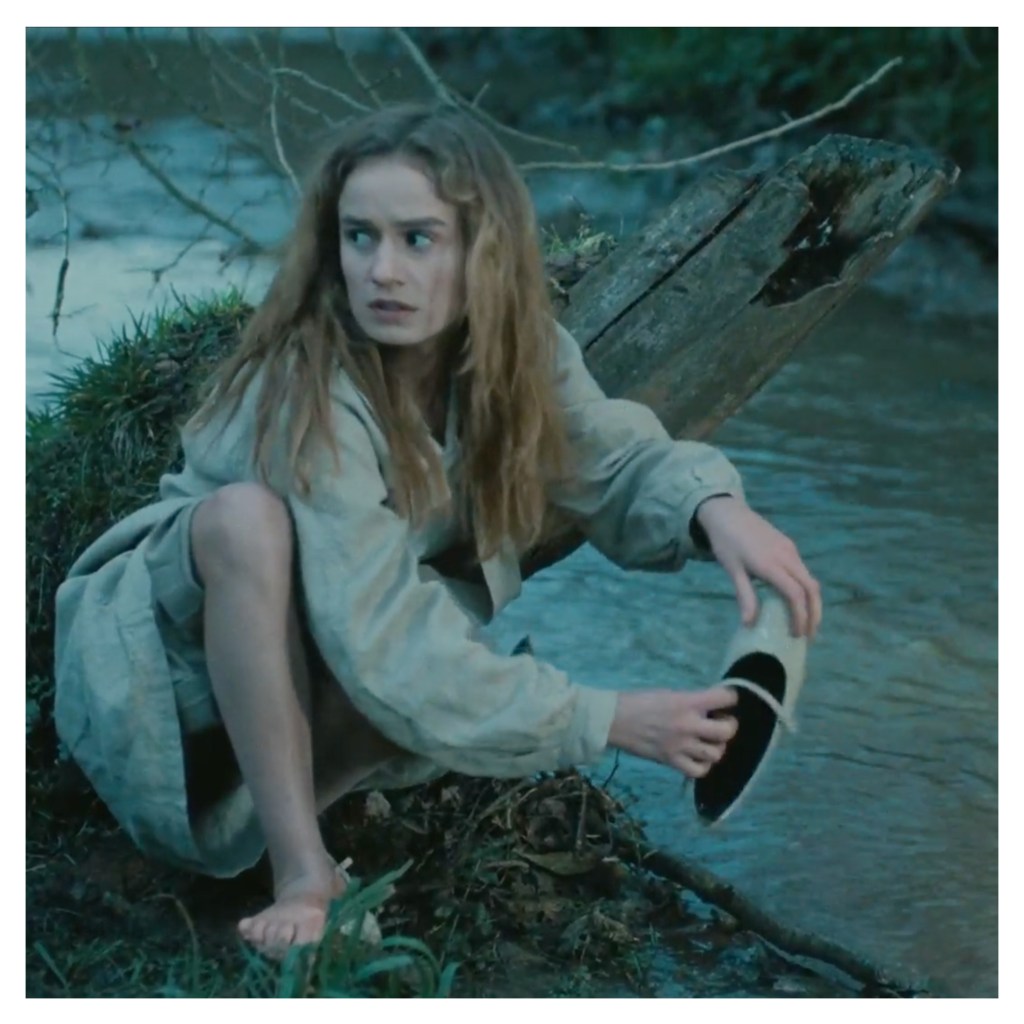
Sandrine Bonnaire, Under the Sun of Satan – In the best way, Bonnaire’s louche, restless turn is out of step with Depardieu’s anguished, restless turn. Maurice Pialat imbues the dissonance between these stars, and the many sinister incongruities in Under the Sun of Satan, with real purpose, even as they slip into the film so casually you may not notice them. Mouchette seems like she’s in an entirely different film until she’s suddenly wrestling with her own guilt and lack of purpose. Working in scenes choreographed with almost no in-camera edits, Bonnaire constructs a very real young girl whose choices are inscrutable even to her. Her encounter with Depardieu has such ghostly, spiritual resonances. Her fate, such as it is, hits like a stone. ★★★★

Pat Carroll, The Little Mermaid – My very favorite Disney villain, Ursula’s lasting cultural impact is as much a feat of Carroll’s vocal performance as Ruben A. Aquino’s animation supervision. Her husky timbre suits Ursula’s voluptuousness so completely it’s hard to believe just how many different designs were made before she came on board, or how many actresses were seriously considered for the part. I’m sure Elaine Stritch and Bea Arthur would’ve been great in their own ways, but I honestly can’t imagine either of them beating Carroll’s deliciously self-satisfied evil, let alone the curvy, Divine-inspired design Aquino and Glen Keane ultimately drew. I love how much Ursula relishes her body and her power. “Poor Unfortunate Souls” is a show stopper on every level, one of the most beautifully animated set pieces of the whole film, and it’s elevated entirely by Carroll’s thunderous rendition. She’s The Little Mermaid’s liveliest, most engaging element. ★★★★

Ruby Dee, Do the Right Thing – Everyone in Do The Right Thing is gifted with a broad, punchy role and plenty of room to color in- and outside the lines. Rosie Perez makes a vivid impression in her debut role, while Joie Lee and Christa Rivers do sharp work from their sweltering street corners. Still, Ruby Dee is the clear highlight of Do the Right Thing’s handful of feminine perspectives. Dee’s Mother Sister is almost exclusively confined to brownstone porch, yet she generates enormous personality from her confined space and wiry frame. Her rapport with Da Mayor, fiery and distrusting after a lifetime of watching him drink his life away, is a potent thread across the whole film. Dee conjures an equally vivid, thoughtful woman in her quieter scenes, able to appreciate the care and attention given by the young woman combing her hair. Mother Sister’s frozen face during the climactic blaze, shell-shocked at what she’s witnessing and the folks who are rising to the occasion, is a touching culmination of her arc. ★★★

Edna Doré, High Hopes – Doré’s stony, seemingly implacable face and fragile, stooped physicality provide a great counter to both the subtle and garish figures who meet her. The characters all seem aware, on some level, how much they expose themselves by how they treat her, making Mrs. Bender an innately disruptive presence. Leigh’s camera captures the frightening abyss between the performer’s dignified gravitas and the dismal smallness she conveys at her most helpless, but it’s more than canny direction and casting. Doré commits to a limited expressiveness, trusting Leigh to suggest depths and allow audience identification from her withholding, while expertly shading in old habits, small joys, the quiet enormity of a mistake as she slides from bafflement to embarrassment at the corner store. Her final scenes, loosening up before bed and making an impromptu trip the following morning, are a gratifying climax for Mrs. Bender, for High Hopes, and for Doré’s indelible turn. ★★★★

Carrie Fisher, When Harry Met Sally…. – I somehow always forget what a riot Fisher is here, maybe because my anticipation of the central romance takes precedent over the uncommonly sharp personalities she and Bruno Kirby contribute. Marie is such a gust of sympathetic and messy impulses, self-aware about her unhealthy appetites towards men but too desperate to set her standards higher. Fisher is hysterical, ensuring these foibles achieve the tenor of Old Hollywood briskness and audience-friendly emotionally maturity When Harry Met Sally sets out for and richly achieves. Her instant chemistry with Kirby, and the polite chatter with their best friends before the two elope in a cab, is one of the best and funniest scenes in a film chock full of all-timers. In every scene, Fisher’s persona provides a sturdy comedic baseline even as she has to make quick work of charting Marie’s growth, making her victory as tangible for us as it is for her.
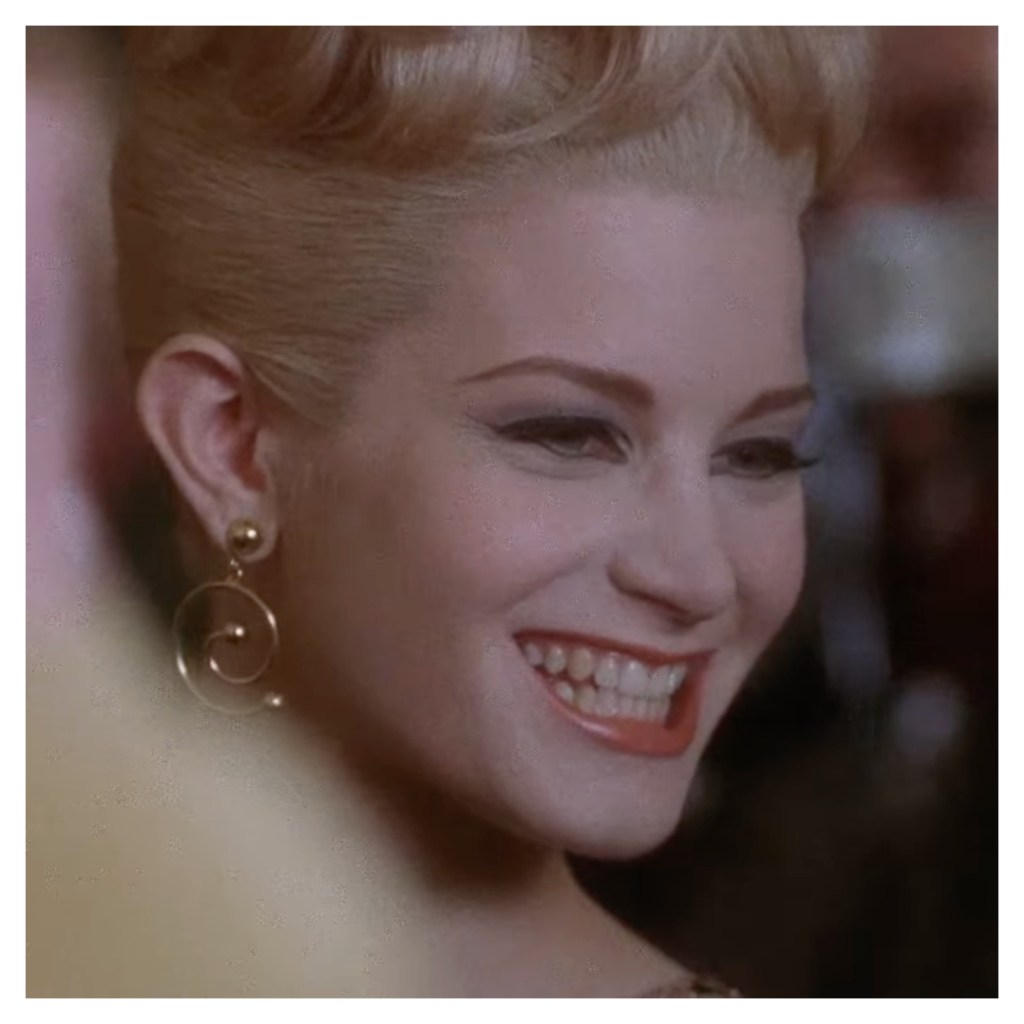
Bridget Fonda, Scandal – Fonda has a good rapport with Whalley-Kilmer’s Christine, quickly growing from rival showgirls reflexively protecting their turf to working women looking out for each other in basically one sequence. Their camaraderie as they barhop, work crowds, and uncontrollably laugh at the men who buy their services, has such an infectious joy to it. Fonda’s appearance on the stand is fun, and ends on the right note of empathy, but if her relaxed approach saves Mandy from easy caricature, I can’t say she’s done much in the few scenes she has to deepen our impression of this woman. Not in any way a bad performance, but what she’s giving surely doesn’t warrant a Golden Globe nomination. ★★
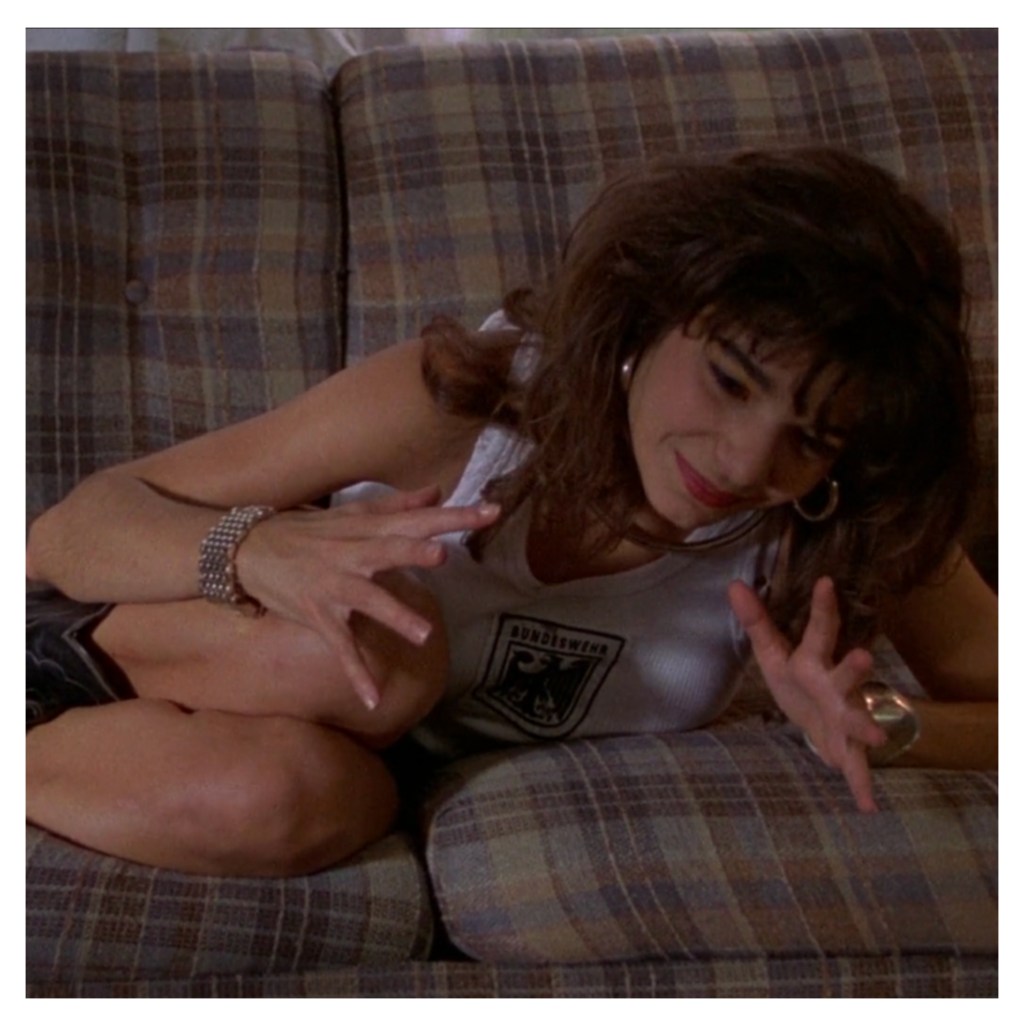
Laura San Giacomo, sex, lies, and videotape – Giacomo is already savvy casting – her strong, square jaw and bright eyes give her a more-than-passing resemblance to Peter Gallagher. The portrait of sexuality in sex, lies, and videotape does not strike me as judgmental about adultery, but the fact they look like siblings make their affair feel wrong. More importantly, Giacomo herself is sensational, non-neurotic about her libido or her duplicities, two traits many performers stumble over. She wears Cynthia’s free-spirit accoutrements cozy as corduroy. Her sibling relationship with McDowell is utterly authentic from every angle. Her physical vocabulary in her long rendezvous with Spader is beyond perfect, walking into his house like she’s been there a hundred times, taking custody of his couch and shrugging off her jacket once she agrees to let him tape her. Watching her grasp at the memory of her first sexual encounter is so recognizably human, so honest, provoking a genuine epiphany in a woman who’s seemed quite content with her life until this moment. It’s the standout scene of Giacomo’s performance, the crown jewel of the best performance I’ve watched in this whole 1989 project. ★★★★★

Anjelica Huston, Crimes and Misdemeanors – The role of the neurotic mistress is treated somewhat negligibly by Allen’s camera. Surely this reflects Crimes & Misdemeanors rooting itself in Judah’s POV, but all the dimension Dolores displays even in these ungenerous circumstances reads primarily as a result of Huston’s performance. The lightness she brings to the flashback scenes of their relationship is affectingly earnest. You can see the joy Dolores gets from Judah but also the immediate devotion, doomed to be unreciprocated, which she’ll later evoke alongside the unseen sacrifices she made for him. Compared to her tonal tightrope walk of a much weightier role in Enemies, a Love Story, Huston is at least as detailed in Crimes at specifying one woman’s conflicted neuroses about an unavailable partner. The lesser status of the role augurs just as well for Huston’s talents, coloring so vividly in a part a lesser actress could’ve left out to dry. And while the impact of her final scene has little to do with Huston’s performance, it’s a haunting, memorable farewell all the same. ★★★

Mary Stuart Masterson, Immediate Family – Real quick: Masterson is absolutely a lead in Immediate Family. Surely NBR put her Supporting because of her age, and because she enters the film about fifteen minutes later than Glenn Close and James Woods despite her central role as the pregnant teenager deciding whether these sweet Midwesterners are the right couple to adopt her baby. More importantly, Masterson gives a textured, in-the-moment performance that reveals as much about Lucy Moore in her line readings as she does in her expressive face. She’s uncommonly good at sizing people up, evaluating what to think of these would-be adoptive parents and hoping, praying they actually like her boyfriend. Her underplaying points to a contemplative, restless inner life, and though the script occasionally compresses some important decision-making, Masterson is able to give real weight to Lucy’s choices. ★★★

Shirley McCalla, The McPherson Tape a.k.a. UFO Abduction – The cast of The McPherson Tape uniformly deserve their flowers for contributing an unshowy, lived-in, deeply plausible rendition of a white American nuclear family sliding between total comfort and utter terror in the face of an unknown enemy. We learn about her husband’s passing and her recent habit of getting soused to late night talk shows. So it’s quite moving when Mrs. Van Heese takes it upon herself to corrale her family at the kitchen table after some particularly bad shit has gone down, grab a pack of cards, and play go fish. Her nerves are evident. Ma’s paean to a long lineage of women who’ve held strong waiting for the menfolk to come home is as much a comfort to her six-year-old niece as it is a reminder for her daughters to stay calm, and to keep herself from running to the bottle. McCalla portrays an on-edge pantomime of normalcy, family theatre of the highest order, and she does it marvelously. ★★★

Della Reese, Harlem Nights – As with almost everyone in Harlem Nights, the star power of Della Reese is obvious the second she walks onscreen, and the film clearly relishes showcasing it. The va-voom of Herbie Hancock’s score as soon as she arrives and the glorious costume she’s wearing is more than backed up by her own charisma. But Reese, much like Jasmine Guy in the film’s only other key role for a woman, is less expressive in her face than her authoritative voice, and she comes across as not receiving much directorial guidance. So as game as she is for scenes like a knock-out alleyway brawl, or a delicate interaction in a friend’s kitchen, she still feels unchallenged by her material and underutilized by her film. Props to Harlem Nights for showcasing so many marquee black artists, but it’d have been nice for writer/director/headliner Eddie Murphy to shape his co-star’s performances and give them more meat to chew on. ★★
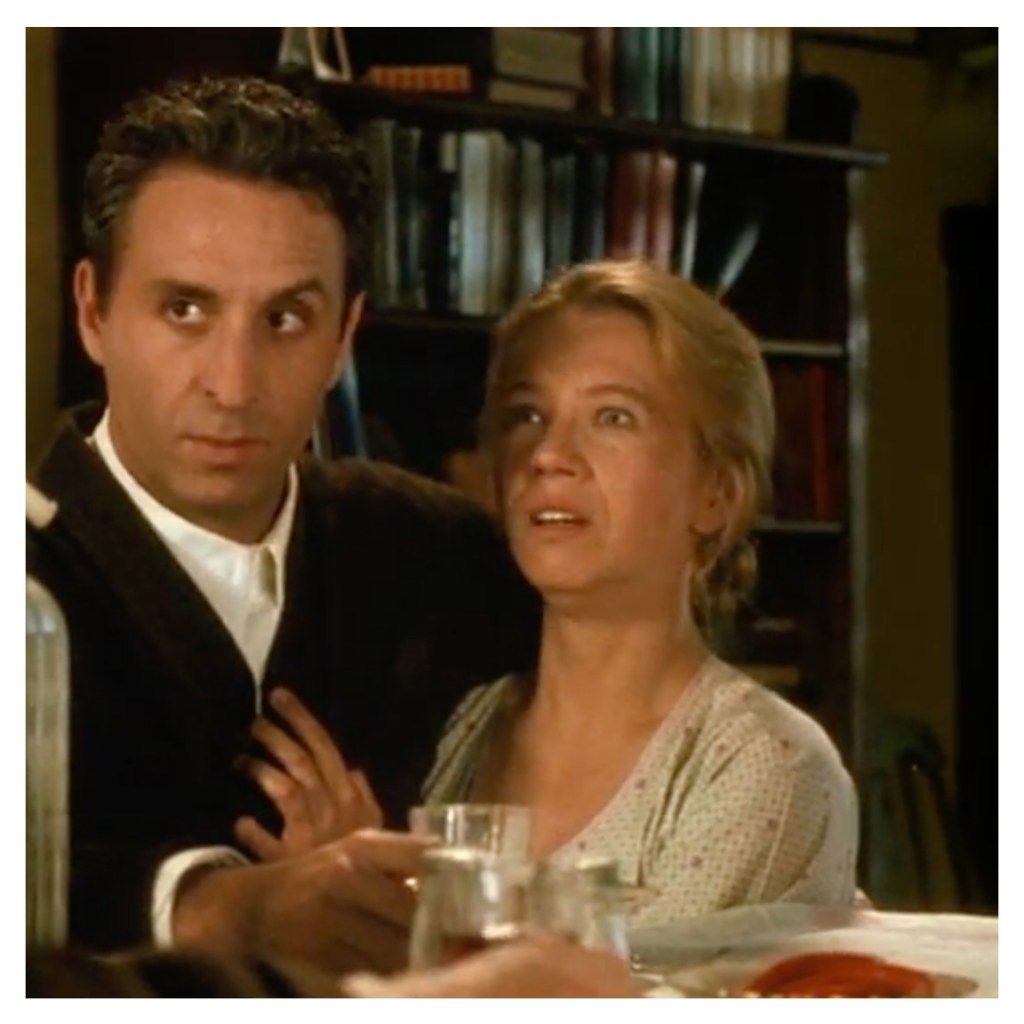
Malgorzata Zajaczkowska, Enemies, a Love Story – I feel a little bad for Zajaczkowska, who reaped none of the awards heat her more famous Oscar-nominated costars received. I feel similarly bad for Yaswiga, who Mazursky frames as the most overtly of Herman’s three wives. Zajaczkowska relates Yadwiga’s journey of old world conformity and American assimilation with a different variation of tragicomedy than Olin and Huston do – in her case, a pantomime rendition of servant peasantry. Damn if she didn’t get me to laugh. Still, it takes a while for Yadwiga’s wants to be more than comedic fodder for her film. Zajaczkowska meets these challenges without breaking her schtick, and her demands to be taken seriously by her husband are quite rousing, but I wish we got to spend more time with this woman. It’s such a loss we never get all three wives together in the same room. ★★★

The Ensemble, Heathers – Kim Walker, Shannon Doherty, and Lisanne Falk are a fabulously awful trio of high school queen bees. Even as the actors embrace shallow, hedonistic caricatures, all three give real depth to their creative, gleeful nastiness and hierarchical foibles. They find the right balance of hivemind synchronicity and distinct coloring, laying out the groundwork for the unexpected shifts in their narrative arcs. Walker’s biliousness and Doherty’s deft evolution from second banana to HBIC are such keepers, though Falk’s confession of feeling lost is an oddly poignant note I never expect Heathers to accommodate. Carrie Lynn and Renée Estevez contribute sharp, mostly backgrounded renderings of depressed, ritualistically shamed high schoolers. Praise be for Penélope Milford and Jennifer Rhodes, too, who paint vividly in one dimension as funhouse mirror visions of adults. Milford, in particular, is so memorably evil in her bright-and-sunny way as a teacher who wants to really make something out of these tragedies. And look at how her ghoulish spirit lives on! Hate it.

The Ensemble, Steel Magnolias – How many homes have built Mt. Rushmores to the humor, fortitude, and catharsis these women have given us? How many have wept for these characters, laughed with them? Iconic doesn’t even begin to describe it. Sally Field remains my personal MVP, and I said everything about Roberts up top, though this most recent viewing has really upped my appreciation for the whole cast. Daryl Hannah, as our entry point into Steel Magnolias, is so sweet and earnest with a woman whose grasping attempts to find herself could have only been comic fodder. But Annelle emerges as a rounded, sympathetic figure, and Hannah gives her an arc even when she’s making this poor girl the butt of the joke. Dolly Parton is as relaxed as she’s ever been, her still waters conveying melancholic ripples for her husband and maternal affection/concern for her new protege. Olympia Dukakis and Shirley MacLaine cut it up beautifully, play fightings like cats even when the hissing gets real. MacLaine’s Ouiser is an especially poignant creation, watching her sisters grow and change and choosing to save herself from becoming the old bat caricature she’s been proudly leaning into for years. Each performer is doing something admirable on their own, and together they’re just magnetic. Any combination of these six women is a delight. Together? Unstoppable. Not even giant ’80s hair can surpass these heights.
There you have it! After all this movie-watching, my final ballot would consist of Edna Dore, Brenda Fricker, Laura San Giacomo, and Lena Olin, with my final slot rotating between Wiest, MacLaine, Carroll, Bonnaire, Balk, and Alonso. You can see the list of my total 1989 watching here.
But now I have questions for y’all! Namely, what performances from 1989 do you hold closest to your hearts? What are some favorites I still need to see? Who gets your vote from Oscar’s lineup? The 10/25/50/75/100 series will hopefully be a big enough project for me to do posts like these later in the year, so keep an eye out, thanks for reading, and have a good day!




 It's Just Like The Movies
Leave a comment