
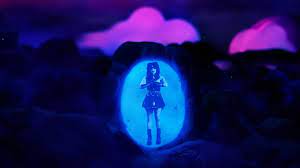
A rarity for me, commenting on a film that’s out now, never minding the two years The People’s Joker has spent in legal limbo and the ongoing questions about how wide the film’s release will ultimately be. But ya girl needs to work at having cognizant thoughts on current releases and not be so scared of being “incorrect” or changing my mind after the fact. Surely it’s better to say something than nothing. And surely I can be more confident in my words being mine, instead of comfortably parroting the ideas of folks I hold to be infallible, and understand that this confidence doesn’t mean this review will be calcified as My Opinion Forever and Ever. We learn! But enough about me!
Instead, let’s talk about The People’s Joker, an absurdist autobiography/parody by filmmaker Vera Drew that’s finally, finally gotten a US release after fighting Discovery and Warner Bros on bullshit copyright charges since it premiered at TIFF’s Midnight Madness program in 2022. The single screening already bore a large title card describing the fair use laws and potential infringement issues its makers prepared to be confronted with and surely hoped to avoid. Drew’s commitment to getting The People’s Joker released is beyond admirable, and her film’s depiction of a faceless institution making only “correct” versions of art legal for the public to practice and observe is so scathingly prescient of her legal troubles, adding another layer to an already dense film. If you can somehow imagine it, the current pre-film legal disclaimer is even longer and more specific, stretched across the screen in such small font that it’s simply impossible to read all the way through before the film properly starts.
The People’s Joker launches multiple story threads right from the start, all centered on [name redacted], played by Griffin Kramer as a child and Vera Drew as an adult. [name redacted] is a young child raised in Smallville, Kansas by their viciously overprotective, unnamed single mother (Lynn Downey). The kid seems fitfully happy, albeit aware that something about them is different that they lack the words to understand. Confiding a deep confusion if they were “born in the right body” to their mother leads directly to a visit to Dr. Crane at Arkham Asylum, who lambasts the kid for expressing an unhappiness that so distresses their mother, and hands them a prescription for an “antidepressant” that affixes a nasty rictus grin to [name redacted]’s face. Nothing is fixed, but [name redacted] is smiling now, and isn’t that all that matters?
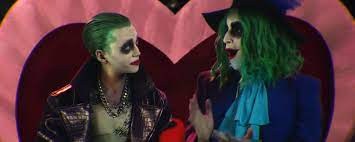
As [name redacted] – who I will now refer to as Vera – enters young adulthood, they set their sights on becoming a comedian and working for the weekly United Clown Broadcasting sketch show UCB Live!, the only legal outlet for comedy in Gotham City. It’s an outlet to entertain the masses, to speak the truth, and it’s a fantastic venue for miserable freaks to find their own kind. Once Vera arrives for her first day of training, she’s almost immediately disillusioned by the pyramid-scheme classes and betrayed by her overwhelming anxiety. Still, she leaves with a new friend, and together she and Penguin decide to start an anti-comedy troupe in the amusement mile. Vera’s stunted personality is finally given the room to grow and explore things about herself, her relationship with her mother, love and self-value, the role of comedy when all else has gone to shit, fascist politics and the populist media it allows to flourish, and the bonds formed by disparate outsiders.
Drew cribs her queer coming-of-age story tropes almost as gleefully as she does iconography from the past seventy years of Batman-related media. I’ve seen more than a couple folks argue Drew’s humor is too caught up in internet silliness and transgirl memes, flattening the film’s themes and images despite her considerable ambition. I disagree with these criticisms, even granting that I am an incredibly easy mark for Drew’s humor and DIY queer punk aesthetic. Her self-disclosure and storytelling are so wildly eccentric and specific, even as she’s flaunting all her blueprints and references at us, that this pilfering of almost a century’s worth of comic book media feels incredibly original.
Not since Valencia: The Movie/S has a film felt so utterly presented itself as a zine, anarchically co-authored by its entire production crew. Blessedly unlike my beloved Valencia, this beast got to stampede its way through cineplexes and fight its way to a proper, high-publicity release. Drew’s thumbprints are proudly pressed on every frame of The People’s Joker, but within those thumbprints are hundreds upon hundreds of other thumbprints, each one as distinct and colorful as hers. This is especially true of the many animators and VFX artists who contributed to the crazy-quilt of pixelated, 2-D, CGI, and who knows how many other mediums we see deployed to create the sets, backgrounds, special affects, and bizarre character designs throughout the film. As far as I can tell, not one scene is set in a real location, yet the green-screen sets are all rendered with real variety and ingenuity by their designers. I don’t know how cinematographer Nate Cornett worked the different lighting schemes into these digital sets, or if he’s even the proper person to credit here, but the deployment of lens flairs, shading of overhead lighting, and other complex environmental facets is continually impressive, nailing the kinds of details you’d otherwise forgive a low-budget passion project for skimping on.
The breadth and imagination of this grimy little film is just as breathtaking as any big-budget affair, and I expect I will be obnoxiously and correctly championing The People’s Joker for its technical achievements, along with a billion awards for every individual animator involved in this magnificence. You can’t say much about The People’s Joker looks “good”, yet every frame, every cut, every line of dialogue indicates that what we’re seeing is the most fully realized version of itself it can hope to be. The editing, in particular, is quite inventive with pastiche and whip-smart gags. There’s one dissolve – going from a scorned lover (who deserves their scorning, I might add) to a character walking down a boardwalk – that I totally love, without quite having the words to describe why it affected me so much. It’s a fun way to approach comic-book pacing and art styles, using dissolves and other editing techniques to overlay and amplify images like so many panels and full-page spreads collaged together.
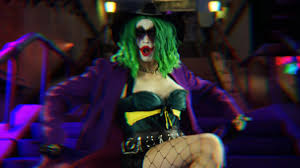
As my friend Lucas commented, crafting such vivid art and personality from almost nothing is a very trans approach to cinema. Is that phrase most or least applicable to Vera Drew herself, whose autobiographical candor and filmmaking brio offer a rich amount of raw material to build on even as those skills wholly outmatch the resources available to her? Most, obviously most. Her origins in improv and stand-up comedy, along with her decade-plus of experience as an editor and director for folks like Tim & Eric, Eric Andre, Megan Amram, and Tim Robinson, has given Drew a very nimble sense of humor and pacing. The film’s delineations between more traditional comedy, parody, anti-comedy, and absurdity are sharp as hell and inventively intertwined.
Commentary on the role and function of comedy while living in a society was somehow not something I was expecting from The People’s Joker, especially as on-screen depictions of the titular role have veered further and further from anything even resembling a joke. But the critique of modern comedy is one of the most salient aspects of The People’s Joker, especially since this thematic spine twists itself so beautifully to weave its way through the other major plotlines. No one aspect of a person’s life is decontextualized from everything else they have going on. Realizing you’re trans doesn’t actually make you better at comedy, but knowing yourself better and living honestly lets you tell better stories, make better art, set your own boundaries, and most importantly, you can humiliate Batman and beat his ass into a fucking pulp.
This also comes with a surprisingly cogent interpretation of the Joker’s rebellion against social order and desperate desire to understand themselves. This version exists without any major symbiotic relationship to the Dark Knight, thank god, and Drew centering the film in the comedy circuit allows the character to be comedically deranged in a way I don’t think most live-action interpretations have really cared to explore in a post-Ledger landscape of comic book films. We can’t say Joaquin’s Joker was all that funny. I might say the appropriation of whole tableaus and lines of dialogue from the 2019 Joker made me appreciate that film’s artistry a little more, though Drew’s incorporation of heartfelt and absurdist comedy sells it in much more interesting ways. Her performance is a major asset, nailing her line readings and negotiating her arc from complacent denial of her own happiness to the radical comedienne Vera will become. I’m also impressed with how Drew keys her whole cast onto the same wavelength, with special kudos for the amount of history and depth Lynn Downey pours into her caricature of an oppressive mother and Nathan Faustyn grounding the room a bit as a new buddy of Vera’s.
In short, I love The People’s Joker wholeheartedly as cinema, as text, as a valentine towards self-acceptance that resonates through its very recognizable iconography without sanding down any of its maker’s unconventional impulses. It’s a riot and a fucking treat and something I cannot wait to share with the folks who didn’t get to see this in theaters once it’s available. Bless Vera Drew, bless the two packed rooms full of queers I saw this with on opening weekend, bless everyone who fought for this film to see the light of day, and everyone who sees and appreciates what it’s doing. The People’s Joker did not trans my gender (yet?????) but it’s as all-consuming and life-changing as falling into a vat of estrogen, and I wish it and its maker a long, lively future.


 It's Just Like The Movies
Leave a comment