

As some of y’all may know, I published a write-up of my entire year-end ballot way back in 2017, accompanied by a separate list I’ve modified as my lineups have changed since the cinematic year came to a close. Every year since, I’ve put out a list but have been trying to do another big year-end ballot write-up, with varying degrees of “close but no cigar” success. Would it have helped if I reminded myself about how late after the Oscars my 2017 ballot came out, or think about if the fragmented release style made it any easier than trying to finish one gigantic, 20-ish category testimonial, this time with runners-up built in? Maybe I should be more generous to myself! Maybe I should be proud of what I’ve written even if the final result is not what I was hoping for!
All this to say that I’ve decided to publish the whole back-catalogue of unpublished write-ups, with some editing to clean up phrases and sentences and grammatical errors but is basically staying as it was. Some of these are about films no longer on my ballot, and some of my writing does not feel as fun, insightful, or skilled to re-read as others, but I still wanna give them their props. The runner-up citations will be staying buried, for now, especially since looking at them makes them feel like a self-imposed barrier to completing my thoughts on the artists whose work actually made my final list. Because I approached these ballots with a ground-up, bottom-to-top strategy (bottom being makeup/vfx, top being my actual top 10), there’s a lot of notices for craft categories and very little for acting and writing, and absolutely none for direction. The mysteries of life! I am also using this as an open encouragement for a (friendly) bully pulpit aimed at myself – I will be writing more this summer, give or take the time I’m devoting to work and moving apartments in a few weeks (big caveats!). But if anyone wants – no, demands! for me to write up my thoughts on a particular category from 2018-2022, let me know and I might feel enough pressure to complete the task! In the mean time, here’s several of my thoughts on several of the very best from the past 5 years of cinema.
2022

Makeup & Hairstyling
- All Quiet on the Western Front, Heike Merker – As a whole, All Quiet is most formally persuasive when it commits fully to its grim, unflinching hyperrealism. In tandem with the production design and effects, the makeup expertly evokes the deepening exhaustion, lack of self, and physical breakdown of the soldiers. There’s a great, quiet scene where Paul and a group of half a dozen boys are unknowingly putting on the uniforms of dead soldiers, and rather than Dunkirk’s assembly line of brunette twinks, the makeup team opts to give these boys very distinct hairdos and complexions, only to watch their individuality be subsumed by their country and subsequently buried in blood, mud, and shit. The different shades of peat, loam, mortar, and muck caked on the soldier’s faces distinguish the topography of their battlefields without violating the hellish indistinguishability from one trench to another, even as these shades of green and brown mix with blood and bruises. Daily grime and mounting despair are rendered as much hideously etched evidence on the men’s faces and bodies.
- Great Freedom, Roman Braunhofer, Kerstin Gaecklin, Tom Mayr, and Heiko Schmidt – The pushes and pulls of Hans Hoffmann’s body across decades spent shuttling in and out of the same prison, gradually filling out his frame and becoming more comfortable in his skin as he acclimates to life behind bars, tells a story unusual for prison dramas. It’s powerful visual evidence of Hoffmann’s acceptance of his identity and the circumstances he’s willing to accept in order to be himself unabashedly. As a character decision corresponding directly as a political act, it enables the central conceit of Great Freedom and Rogowski’s physically rooted performance beautifully, while still adding conspicuous signs of aging to his eyes and forehand (self acceptance is not eternal youth). The more subtle but no less detailed aging of Georg Friedrich’s longtime inmate, hard lines etching deeper into him even as he opens himself to this new companion, is similarly impressive, as are the accents to one-off but no less crucial figures who appear throughout both men’s lives.
- Hellraiser, Kristina Marjanac, Josh Russell, Sierra Russell, & co. – By and large, I found little to admire in this new Hellraiser, which tilts too willingly towards the slack and generic for a series rooted in otherworldly pleasure and pain. Jamie Clayton’s coiled, insinuating Pinhead was a glorious exception, as were the designs of the new Cenobites, honoring the grotesque beauty and kink that defines their ethos in a visual mein distinct to contemporary eroticism. Rather than leather-clad doms, these Cenobites are all about body modifications, flayed musculature, and exposed skin. The updates to the Biter and especially the Priestess showcase excellent change on familiar figures, but this team deserves tremendous credit for the new monsters they’ve created – The Gasp (the one with the open throat) was cunty as fuck. A shame the lighting doesn’t show the Cenobites off to their best effort, and that the film has less gore than it should (though what we saw looked great), but it’s still my pick among this year’s gallery of killer horror makeup.
2021

Costume Design
- Spencer, Jacqueline Durran – There’s a line in Spencer where Princess Diana, attempting yet another tiny rebellion against the oppressive control of her in-laws, says she wants to redo the pre-assigned order of her outfits because it’ll help her stand out when they demand her to become one of their accessories. This statement of intent is about as heavy-handed as any line of dialogue in the film, yet Durran’s recreations of Princess Diana’s outfits turns this declaration into a film-wide project of remixed temporalities and visually authoritative mood pieces. Without neglecting the supporting cast and glorified extras, the sumptuously styled, richly saturated costumes continuously draw our eye to Stewart’s Princess, making her look out of place and isolated whether she’s petulantly trying to make everyone look at her misbehavior or hoping in vain she’ll be left the fuck alone. The costumes transform the actress and the character into cubist geometrics of abstracted yet potently felt emotion, matching Diana’s own surfeits of inchoate, desperate feeling.
Makeup & Hairstyling
- The Green Knight, Eileen Buggy, Audrey Doyle & co. – The titular Knight is arguably the film’s marquee showcase. Interpreting him as a hulking, gigantic tree of a man is one of Lowery’s most successful visual ideas, created almost exclusively by makeup and practical effects into a creature of intimidating might, honor, and dignity. He’s at one with the natural world and assured of his place in it in a way Gawain is hopelessly unable to match. The Knight would be more than enough to merit The Green Knight a makeup nomination on his own, yet look at how sharply, lusciously, ridiculously handsome Dev Patel is at all times, even by the astronomically high standard of how hot Dev Patel always is. Or how the unnervingly gaunt King and Queen seem to be decomposing before our eyes, waiting for an heir that will never return. I didn’t love the look of Alicia Vikander’s raffish prostitute, but her ornate Lady and Joel Edgerton’s bear of a Lord evoke distinct tenors of alien allure and unease. While still rooting itself in Arthurian archetypes, The Green Knight’s investment in exploring them from new angles gifts the whole cast with richly textured appearances that often convey far more than the actors themselves ever do. Bonus points for everything done to Patel in the not-quite last chapter.
- Malignant, Mike Elizadlee, Lori McCoy-Bell & co. – Certainly half of this nomination goes to Annabelle Wallis’s perpetually matted, heavy-looking wig, which Malignant audaciously presents as not just the only haircut Madison has ever had in her life but a genetically predominant trait. How did it not cushion her poor skull against that wall? How was her sister’s blondeness not an immediate giveaway Madison is adopted? And then there’s Gabriel, a physically repulsive, unusually designed ghoul who’s just as upsetting to behold every single time I watch his reveal. Everything needed to bring him to life – the full-body prosthetics and puppets, the sight of his extreme surgical procedure and the pushing down of the remnants, the kabuki masks of Wallis’s immobilized face – are realized with great care and unnerving plausibility, turning Gabriel into a nightmare made flesh. The combined efforts of contortionist Marina Marzepa, actor Ray Chase, and costume designer Lisa Norcia go a long way to make Gabriel a credible threat, and the makeup emboldens their efforts by making Gabriel himself such a grotesque, instantly iconic figure. He even gets a darker, rattier wig of his own!
- Old, Michelle Diamantides, Tony Gardner & co. – Amidst the insane premise and indiscriminately keyed-up direction, Old’s makeup goes for restraint rather than maximalist body horror. Details like hair and nails not changing are oddly thoughtful of some scientific truth, and the approach to wrinkled skin is nicely underdone, as compared to so many TV shows and films that opt to make actors look like walking corpses of warmed-over skin folds for the crime of being magicked into their seventies. Dead hair and nails means no graying wigs or gangly claws, but the juxtaposition of the static, unchanging features each person possessed when they entered the beach against newly manifested crow’s feet, milky white eyes, and other forms of bodily degradation are strikingly effective. Clean, simple work that balances the film’s competing impulses towards sentiment and scares. Bonus points for everything to do with the Abbey Lee character, flirting with cliché yet culminating with unexpected poignancy.
- Titane, Flore Masson – For all that Ducournau’s directorial tone and scope have changed between this film and Raw, Titane retains and massively expands on her knack for vicious, scenario-specific body horror, and the mutations of Alexia’s body remain a site of fascination throughout, shifting in appearance as messily and radically as Titane leaps between genres and conflicts. Her pin-up car-show eroticism is attractive and character-specific, and the carnage left in her wake toes a fine line between clinically visceral and lightly absurd, like the metal hairpin sticking out of Garance Miller’s cheek. Her Dogtooth-style facial modifications are gruesome and fiercely executed, yet the real coup is every mechanical . . . . transformation? adaptation? overhauling? – of her body to accommodate whatever child is growing inside her. From the cracks of metal peeking through Alexia’s flesh to the scars and bruises left by that insanely durable duct tape to the sagging of her breasts and swelling of her stomach as the little monster’s birth draws ever-closer, the makeup realizes this grotesquerie in vivid, creative, unsparing detail.
Visual Effects
- Annette, Esther Charlier, Romuld Collinet, Thomas Jonckheere & co. – Poor, wooden baby Annette, standing in for a real human child, sits at the crossroad of several paradoxical impulses in her film. Yes, she hyper-literalizes the way that Annette is raised/used by Henry and Ann to such an absurdly obvious degree that I feel silly even establishing it, but she’s just as much a way for them to avoid addressing her or each other as real human beings. She’s also the most successfully sustained oddity in a film bursting with prankish, sometimes unpleasant asides and off-ramps that don’t always lead anywhere. Annette is a creature of the uncanny valley and an object inspiring real warmth and concern from the audience and the other leads in the film, even amidst a wild, arguably truncated arc. Such a memorable, evocative stand-in that it’s almost a shame to see her set aside at the film’s conclusion.
- Dune: Part One, Paul Lambert, Tristan Myles, Brian Connor, and Gerd Nefzer – We here at Big Worm LLC are absolutely thrilled by the positive reaction to Dune’s visual effects. There’s a lot of top-tier worldbuilding besides the worm, sure, both in the sense of grand, multi-pronged narrative scope and the literal construction of Arrakis, itself a dual feat of scrupulous physical designs and on-location shooting blended seamlessly to VFX work. It’s among the most plausible sci-fi environments in recent memory, leaning hard into photorealism and operating from a tight color palette. You simply can’t get sand this high-quality at any corner store. When an effect breaks from the predominantly sandy imagery, as with the hallucinogenic swirls of Spice that periodically puncture the film or the white, spindly, holographic tree Paul uses to hide from the Harkonnen hunter-seeker, it pops off the screen without disrupting Dune’s overall visual stratagems. And of course, the sandworm, cutting through the plasticky Arraken sands like a whale careening through the oceans, is a real marvel of narrative buildup and gargantuan payoff. What more could the people want? Two worms? One isn’t good enough? Preposterous. Fuck off.
- No Time to Die, Charlie Noble, Mara Bryan, Joel Green, Jonathan Fawkne & co. – Nestled in a year of truly astonishing CGI achievements and weirdo puppetry, No Time to Die stands out as a feat of tactile, muscular action set pieces, each with their own distinct set of stakes and ballistic capabilities. Motorcycle chases, cars flipping onto bad guys, shoot-outs on frozen lakes and at parties attended by a cabal of ultra-wealthy, world-ending villains, all of it dramatized with pulse-pounding verisimilitude. Grounded and kinetic even when the film is neither of those things, the effects work consistently and efficiently give this funereal conclusion to the Craig-era Bond a welcome spring in its step.
- Raya and the Last Dragon, Kyle Odermatt, Osnnat Shurer, Kelsey Hurley & Paul A. Felix – In a stronger year, Raya would probably not make this lineup. Maybe its inclusion speaks to me not prioritizing several obvious VFX showcases or undervaluing the skill of my runner-ups. Or perhaps I’m undervaluing its work due to my general dislike of Raya as a film, which irritated the hell out of me as a story with themes and characters and jokes to have to listen to while boasting some of the most gorgeous imagery I’ve ever seen in a CGI film, realistic with human models but so vibrant with color, motion, and cartoony effects. The Druun, looking like ravenous, raging thunderclouds roaming the Earth’s surface, really pop as a world-ending terror. Best of all are the dragon’s magic, mostly demonstrated by some genuinely stunning water effects. The scenes of Sisu playing with her newfound abilities are the purest delight Raya conjures up.
- The Suicide Squad, Daniel Sudic, Guy Williams, Jonathan Fawkner & co. – What a joy to see how much color and personality has been implanted like a bomb into this film after a dismally dreary first outing. This isn’t only visible in the effects (the generally stronger performances and colorful outfits are other welcome highlights), but compare how well THE
Ohio State UniversitySuicide Squad sustains film-long ingenuities and knocks its showcase sequences out of the park, and the improved quality is fuckin’ awesome. I love the purely subjective embellishments adorning Harley Quinn and Polka-Dot Man’s rampages. The meaty, doofy, loveably monstrous King Shark and the Ratcatcher’s hordes of besties are miles superior to poor Killer Croc, just as Starro’s richly saturated colors, jiggly walk, and kaiju scale is light years beyond whatever the first film’s big bad was. A showcase as variegated and eye-catching as any good rogues gallery.
2020
Costume Design
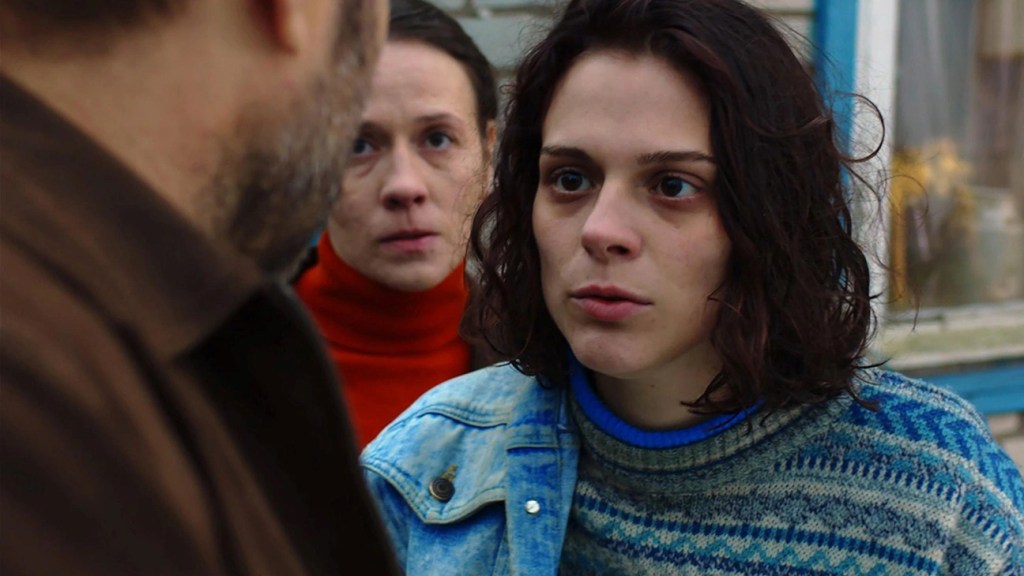
- Closeness, Lidiya Kryukova – Unlike the high stylization of Beanpole, Balagov’s previous feature inhabits a form of pulp-inflected psychological realism that you could comfortably program alongside a Farhadi film. Closeness in fact has a similar-ish conceit to Everybody Knows, as the central family scrambles to find enough money to pay off a ransom demand for their son. Still, Balagov’s visual eye is already present, and Lidiya’s costumes serve as the film’s most theatrically expressive elements. Color is used to tremendous effect, expressing personality and alliances while cut and fabric further individualize the characters. It’s remarkable how much the final gesture between the lead and her mother owes its poignancy to the specific jacket the mother wraps around her daughter.
Makeup & Hairstyling
- Borat Subsequent Moviefilm, Katy Fray, Lisa Layman, Thomas Kolarek, Kimberly Boyenger and Tyler Ely – Yes, Borat and Tutar’s various disguises barely resemble normal people, looking instead like costumes made from aliens with a solid but not entirely surefooted understanding of what human beings look like. Even Tutar’s natural self, going from a feral child to a distilled essence of a Fox News anchor, is wildly exaggerated. Borat himself somehow reads as the most recognizably human person of the two, and isn’t that saying a lot. Still, I love how blatantly unconvincing and threadbare the disguises are. Partly because their weirdo exteriors are the most obvious indication that Cohen and Bakalova are varying their schtick to match whatever scenario they’ve concocted. Even more so because watching the proprietors and doctors and randos on the street evaluate exactly what they’re looking at and how on earth to best approach them remains one the film’s most interesting pleasures. It’s a fantastically American mutation of appearance and personality, so completely fucking absurd to look at and interact with that the sheer improbability of its existence winds up making it seem more plausible.
Visual Effects
- Love & Monsters, Genevieve Camilleri, Matt Sloan, & co. – A feat of creature design, finding so many interesting appearances that look like plausible mutations of recognizable cold-blooded animals. It endows each species not just with color and dimension but tangible physical textures. Each creature looks as sleek or slimy as it’s supposed to, but moves in a way befitting its size and unnatural, immediate threat. The CGI interacts fantastically with the rest of the world (some practical effects help), and the big set pieces feel genuinely scary and exhilarating. Bonus points for the cool robot, surely the best of the sparse but impressively utilized practical effects. Bonus bonus points for having the smarts not to make the dog CGI, and bonus bonus bonus points for having the CGI creatures play off the real pup so believably when they share the screen.
- Tenet, Andrew Jackson, Mark Patch, & co. – Bless Tenet for not bogging itself down with in-universe monologues rigorously detailing over and over how this inverted entropy thing works, sometimes ending those ostensible info-dumps with the speaker waving their hands in the air and asking us/The Protagonist to just roll with whatever cool shit the film wants to do. The age-old cinematic technique of “drop down, flip it, and reverse it” gets a real workout here, and it’s tremendously fun to just sit back and watch a drag-out fight where each participant is moving in a different temporal direction. Even dirrigur shit like crashing a plane through a building seems bigger and more exciting. It’s all so direct, yet it keeps finding new and exciting ways to visualize this conceit onscreen. They play all the better for not being weighed down by concepts of Time and Space or Whatever, and I for one appreciate that.
2019

Actress
- Julianne Moore, Gloria Bell – Yes, Julianne Moore’s Gloria is not the assured, flinty Gloria Paulina García so stunningly brought to life in 2013, though I am no less happy to have met Moore’s sadder, mousier version of the same woman, and happier still that Moore has opted to play this character with her own distinct interpretation rather than trying to imitate García. Yes, Gloria Bell is not quite the film Gloria is, though each version are great times in their own right. Most of all, I’m so delighted to witness this apex in Moore’s commitment to acting as being, at a higher, more convincing degree of moment-to-moment naturalism and overarching characterization than I’ve ever seen her pull off. I love that she’s able to portray Gloria as a self-sufficient person while still making her seem a bit lonely, the way she clearly enjoys spending time with her family but doesn’t notice how tetchy her kids get when she tries too hard to get involved in their lives, or how she doesn’t seem to have many work friends. You don’t get the sense she’s looking for a man, though she’s certainly delighted about being with Arnold. Moore capably shows us a great deal about Gloria’s wants and joys, though is she ever more transcendant to watch than when she’s totally absorbed in something, conveying nothing but the sheer fact of her attention? Grooving to an indisputable bop at the club, listening to music at a party, giving Arnold her full attention while he recites a poem to her, she looks completely lost in these moments without communicating what exactly she’s responding to. Moore validates Gloria Bell as a good time but also a unexpectedly contemplative one, about someone exploring new sides of themselves but also one of unspoken histories and private reactions, so consummately generous towards her co-stars and her director that it isn’t immediately clear that she’s got her own secrets, even from us.
- Lupita Nyong’o, Us – I’m gonna start my praises for Lupita Nyong’o’s performance by repeating an idea about her work I got from Matthew Eng, who regards her genius as not just a dual performance but a quadruple one, playing two characters who have molded themselves into entirely new lives after a dramatic reversal of fortunes. To this end, one of Nyong’o’s most exciting touches is how quickly she lets Adelaide’s mask drop when she’s alone, reverting to some mad, wordless, jittery state. Then again, it’s not as if her vocal inflections, her darting eyes, and her tense physicality when she’s with her family don’t all signal something subtly but visibly off about this woman, as though she’s still trying to assemble a version of herself suitable for her new world. The bond between Red and Adelaide is the gnarliest, most layered element of Us, already frightening on first view but full of hidden depths to be recognized on re-watch. But it’s essential to the success of Us that Nyong’o has constructed her two characters so sharply that their impact is not completely dependent on the last-minute reveal. Red is a fantastic, horrifying characterization, speaking with a voice that makes every word sound painful, moving with a warped grace reminiscent of the ballet lessons she never took, her uprising no less dangerous for the very specific contexts behind her abuse as compared to the other Tethered, who still have plenty to complain about. She’s a legitimately tragic figure, whose lifetime of loss and pain are now channeled into revolutionary action. Nyong’o’s theatrics here visibly contrast with Adelaide’s normalcy, yet she ensures Adelaide is a compelling figure in her own right, giving her fortitude without belying our initial impression of the caring, literally haunted woman she signals early on. Her desperation to keep her family safe while clearly feeling some connection towards the brood of her double, her resourceful ascent to the head of her household, her fear of Red and willingness to fight her when pushed to it, all are astonishing arcs that are no less impactful once we learn about her history with Red.
- Taylor Russell, Waves – As with Lily Gladstone in Certain Women, color me slightly confused at how an actress at the center of her film’s second hour was ever pushed as a “supporting” performer. But also like Gladstone, regardless of which category would be “best” to honor her achievements, Russell’s gorgeous, refractive interpretation of a wallflower coming into her own is her film’s most invaluable asset. Her handful of scenes in the first half augur a quickly established, emotionally deft reading of a young woman helplessly watching her brother implode, one it’d be nice to spend more time with before she’s suddenly, gloriously gifted the whole film. The aesthetic overhaul for her section of Waves is both a completely appropriate shift towards Emily’s reserve and as stylistically worked-over as her brother’s free-fall, and it’s astonishing to watch Russell fulfill Schults’ hyperbolic grammars within a totally naturalistic acting key. Her push-pull of confronting her grief, subsuming it, or redirecting her energy at her new boyfriend – pushing him towards a catharsis she’s either unable or unwilling to initiate in her own life, if she even imagines it’s possible – is all the more remarkable for how Russell embodies these tensions through gradations in posture and voice and the flickering of expressions across her face. She, like her director, is also capable of unexpected emotional depth, not just the roiling guilt and anger during her riverside conversation with her father but her tear-stricken attempts to answer her parent’s texts in an elevator. The latter scene is a poignant culmination of a performance that has been defined by a carefully maintained tension of tranquil surfaces and real despair, and a brilliant conclusion for an actress I look forward to seeing more from.
- Alfre Woodard, Clemency – The single greatest performance of the year. Part of Woodard’s genius (as well as writer/director Chinonye Chukwu’s) is to establish in her first scenes that Bernadine has been asking questions of herself long before the narrative actually begins, rather than during Clemency’s horrific opening sequence – a botched execution where Bernadine is considerate of the prisoner and his mother but whose first impulse when something goes wrong is to hide it from view – or sentimentally triggered by Anthony’s case. When she says she gives her prisoners dignity and respect she means it, though her ideas of dignity and respect have clearly been molded to those of a system that does not view anyone involved with the humanity they deserve, including her. She’s able to impart years of history with each of her costars, particularly the push-pull she exhibits with her husband (a moving Wendell Pierce), wanting to restore their marriage as much as he does but put off by his inability to grasp how much her job has burdened her, to say nothing of her burgeoning conscience. She gives Bernadine such a high baseline of professionalism and remove that any waver in her facade signals the emotions she’s working to suppress. Witness how much distress Woodard suggests during her second attempt to call a would-be visitor for Anthony, almost identical to her earlier call in dialogue but transformed through her pauses and stutters into something much sadder and more upset, capped off by how hesitantly yet how sharply she hangs up the phone. Her entire characterization is built on scenes like this, using her face and body to convey roiling guilt and complex reconsideration of self through gestures that are not just emotionally intelligible but thoroughly cinematic in scale.
Actor
- Tom Burke, The Souvenir – For a film that builds a precarious tension between the familiarity of its script and the unique approach of its direction, it’s miraculous the unreliable, drug-addicted older boyfriend is the freshest, most distinctly realized element of The Souvenir instead of the stalest. Burke is completely in sync with Hogg’s visual and aural strategies, registering as strongly in the center of the frame as on the edge of it or outside it altogether. This feat is all the more remarkable for how restrained Burke keeps his gestures, postures, and voice, his stillness entirely befitting Anthony’s distinct energy, inviting you from some distant but intriguing remove rather than being outwardly imposing. He’s also, by several degrees, the only element in The Souvenir who actually challenges Julie’s conceptions of herself and her art, be it through the many conversations they have where he makes her articulate her motivation for creating a film about people so outside her own circumstances, or the audacious, I-could-give-a-fuck-if-you-believe-me way he admits to ransacking Julie’s home and hiding behind his government job as an excuse (does he actually work in Foreign Office??) before refusing to admit any real wrongdoing. These scenes are, in part, even more provocative because we’re never completely sure whether his critiques are sincerely meant or simply badgering. There’s a palpable wall between Anthony’s interior and the world around him, even from the audience, his every move underlined by a level of mystery that’s more magnetically obdurate than Gothic secret-keeping. The awful, naked pain of his breakdowns only magnifies how well he’s hidden himself away elsewhere in the film. Burke saves his character from any conspicuous good-to-bad or bad-to-worse arc, ensuring him the astonishing complexity of being a normal, fascinating, sort-of-shitty guy who likes his new girlfriend and is very good at hiding how bad he’s doing.
- Mark Ruffalo, Dark Waters – Maintains Dark Waters’ gut-churning balance of steadfast outrage and soul-crushing deflation with a potent mode of anti-charisma, keeping careful stock of Bilott’s arc without turning him into the story. Visibly outside his firm’s boy’s club despite making partner but still fully incorporated in its system, lacking even the most basic charisma of a Jimmy Stewart or Julia Roberts, Ruffalo couches his awkward blandness into a hard-working, Midwestern self-effacement rather than the neutral unfeeling of a corporate cog. Already he ensures Bilott’s arc is not one of moral reawakening but of reassessment, realizing what crimes the systems he’s given his life for have perpetrated and uprooting himself entirely in order to fight against it. His early underplaying of skepticism, naiveté, and decency allows for incremental shifts in his outlook to register the upheaval of his worldview without overhauling his dour affect. Ruffalo’s hunched posture and unassuming presence suits the film’s penchant for dwarfing Bilott, often sticking him next to taller costars, tucking him in the edge or corner of the frame, or surrounding him opposite boxes packed with so much evidence that even the idea of investigating them feels overwhelming. And yet, he does it, his perseverance the most palpable evidence of a spine of steel no one – including Bilott himself – believed he possessed. A lesser actor would seek to make this commitment inspiring, but Ruffalo rightly mirrors the rising stakes and new developments of his case with real horror at the knowledge he’s uncovered and the unfathomable, blatantly underhanded efforts to deny wrongdoing. The toll of this case is reflected in his body and soul, his nearly nonverbal depression towards the film’s end sad but all too easy to empathize with; After all, how else should one respond when watching justice be snatched away at the hands of criminals, ones using the institutions meant to limit them in order to cause more harm, despite repeatedly proving your case only for the goal post to be moved again and again?
Supporting Actress
- Deirdre O’Connell, Diane – A standout of Diane‘s flawless ensemble, not so much fulfilling a more showcased role than her co-stars but matching the lived-in honesty of her film in the role most susceptible to false dramatics. But first, I think it’s easy to take for granted how believably sick O’Connell seems; her physicality is largely limited to the positioning of her hospital bed and the number of pillows propping her up, her voice so gravely and shot she can barely talk above a whisper. It’s a technically astute performance, on top of a smart characterization. As Diane’s cancer-ridden cousin Donna, O’Connell fully avoids filtering her outlook or personality through deathbed clichés. Her gruff candor is a warm, occasionally abrasive directness developed over a lifetime of refusing to give or take shit from others, rather than the last-minute vituperations of a dying woman. She’s a great friend and a stalwart advisor, telling Diane exactly what she needs to hear in a way that makes her really stand up and listen. O’Connell also refuses to view this straightforward personality as a lack of emotional complexity, most notably when she can’t resist throwing a barb at Diane over a past indiscretion and immediately tries to retreat before explaining whether she’s forgiven her or not, the simplicity of her delivery compounding how long she’s had to sit with and sort through her feelings to a very upsetting event in their lives. In every scene, O’Connell imparts something new about her character while unfussily evoking a lifetime of history between herself and Diane, leaving an indelible impression Diane never shakes after she dies.
Supporting Actor
- Bill Camp, Dark Waters – “How’d you like that on your table?” asks Wilbur Tennant, referring to the purple, corroded tumor he’d cut off one of his heifers some time ago and is now showing to Rob Bilott alongside a gallery of disfigured, discolored cow parts he’s saved as evidence of DuPont poisoning his land. This line reading, lacking any real wit but still reading as such a stark, in-your-face dare to say his cows haven’t been infected, is the moment I knew I was all the way in the tank for Bill Camp’s performance. A lot of what’s appealing about Tennant comes down to all the things he plainly isn’t: he’s not some raving Cassandra; his anger isn’t charismatic or self-righteous or archly charming; he’s not a naive, sentimentalized concept of the wounded, blue-collar Midwest. Nor does he place undue emphasis on his farm, his family, or himself as helpless victims, even as he’s gravely concerned for their safety. His anger is for no other reason than a grievous wrong was committed against him, one that was allowed to happen and is now plainly being swept under the rug by the institutions designed to prevent it in the first place. For all his coarse accent and slightly odd vocal tics make him a bit hard to understand, forcing us in the audience to really pay attention to what he’s saying, he’s remarkably clear in his quest for someone to listen to him and actually do something about this like they’re damn well supposed to. Badgering Bilott towards moral awakening and resolution through the strength of his own convictions, holding no illusions about DuPont’s conspiracy but still stunned by the scale of their actions, Camp is the outraged heart Dark Waters needs.
- Aldis Hodge, Clemency – The two things we most often hear about Anthony Woods, from the prison officials overseeing his demise and from the lawyers and protestors who constitute his allies, respectively, is that he’s shut himself down completely after 15 years in death row, and that he will be loved and championed long after he dies, in a way that ostensibly honors him as one of who knows how many black man executed in America under dubious evidential circumstance, semi-abstracting and taking for granted the irreversible fact that he will soon die. Hodge works with and against these conceptions, keying to Anthony’s guarded exterior even as his emotions remain profoundly accessible, and individualizing his psyche while playing a distilled idea about the thousands of men that have stood in his shoes. So much of his performance is rooted in his body language, carrying his despair in his shoulders and on his brow. He practically asphyxiates as Bernadine begins detailing the procedures of his execution; when he attempts suicide soon after this interaction, you can practically see the despair coursing through his body as though powering him to try and take his own life. But Hodge also gives Anthony an earnest wellspring of hope that’s neither rhetorically heightened or uncompromised by a need to hear things will work out, perking up whenever he sees his lawyer but unwilling to consider a sudden letter from an old girlfriend might not lead to a new beginning. Through all of this, Clemency repeatedly signals Anthony isn’t responsible for the killing he’s about to be executed for, yet Hodge never centers his characterization on innocence or guilt. Instead he connects to the sheer, awful reality of being sentenced to die, deftly shading his despondency, his honest-to-God hope he’ll be granted clemency, and the many coping mechanisms he needs to get through the day, making Clemency’s moral reckonings all the powerful by connecting to some of its toughest truths.
- Denis Podalydés, Sorry Angel – There’s a lack of conflict in Sorry Angel, its suffering beatific in a way that cordons it off from real ugliness or judgment. I don’t mean to crudely position Podalydès here as some antithesis to beauty, especially since he’s quite handsome. Part of what’s so endearing about his performance is his refusal to play this older man as someone even remotely cowed by the pretentious twink(s) he keeps having to help guide through messy life choices. What he does do is push against the hermetically sealed lightness of Sorry Angel in a way that doesn’t disrupt Honoré’s tone, imbuing a subtle comedy into many of his scenes while coming across as the only character considerately evaluating everyone else’s choices beyond what the script asks him to think about. Even if Matthieu doesn’t get the chance to voice what he’s thinking as often as he should, Podalydès proves himself to be an uncanny telepath, and quite gifted at physical communication – most vividly his bottled shame at being disregarded in a bed he already felt unsure about joining, and the way he can’t look Jacques in the face in their final scene. He’s savvy enough to suggest some familiarity behind the opinions he expresses, implying a full life in his line readings without pulling focus from the castmates he upstages. Which is a damn shame, since Sorry Angel could use as much his wisdom as it can get. If any character deserves their own Gloria Bell, it’s certainly him.
Adapted Screenplay
- Dark Waters, Mario Correa and Matthew Michael Carnahan – Perhaps an easy achievement to overlook, since so many legal dramas gesture to the gravity of real-life misdeeds and the cost of doing the right thing in much shallower and more hyperbolic ways than Dark Waters. Correa and Carnahan don’t necessarily reinvent the wheel, but they make it as effective and provocative as I’ve ever seen, both on a macro level of story structure and a micro level of understanding the granular, toiling ways rebellion against power is undertaken and fought against. The quick shift in Victor Garber’s CEO, from patronizingly compliant with Bilott’s nascent investigation to his almost violent outburst upon learning Bilott actually intends to pursue the case further instead of being grateful for what he’s got and shutting up, is a full story in itself. The script spares no detail in recounting the actions a near-omnipotent, unregulated corporation is willing to do for the purposes of making a profit, let alone saving their asses in covering up those actions. Nor does a character’s choice to fight said corporation include a reconfiguration of all past personality traits or priorities, or come with an infinite well of patience in the face of this seemingly endless case. Rob Bilott’s arc, breaking against the system he once upheld and becoming more despondent even as victory grows incrementally closer, is a powerful crystallization of Dark Waters’ thesis on how emptying such a crusade actually is. If Todd Haynes’ direction rightly deserves credit for shaping these concerns into a cousin of [SAFE], Correa and Carnahan’s script merits its own attention for being a dense, engaging object as well as the steely spine for Haynes to impress his distinct interpretation.
- Hustlers, Lorene Scafaria – Finds a propulsive balance between the pure entertainment this tabloid story provides in spades while maintaining a sharper, more considerate eye towards character and theme than many would’ve even pretended to give it. Scafaria has a real knack for setting up the lay of the land in precise, detailed strokes, adding new dimensions to its rules and operators in every scene, only to tear it all down and start from scratch somewhere new, holding onto everything each crash means for the folks living through it. Characters emerge fully-formed in only a couple lines of colorful, to-the-point dialogue and some quick business, like in a classic noir; the many dynamics at play in Destiny and Ramona’s relationship is among the most layered partnerships in recent memory. She also ensures the scenes we see everyone practicing their craft or celebrating in their victories are as revealing and delightful as watching them go to work with all the effortless skill they seem to possess, be it Ramona teaching Destiny how to pole dance or the formation of the hustling team between Ramona, Mercedes, Annebelle, and later Destiny. There’s not an ounce of fat in Scafaria’s screenplay, no indication she believes in wasting time, or that a film can only be one thing at any given moment, ensuring that Hustlers functions at all times as a delicious crime drama as well as a study of female friendships, workplace desperation, and American entrepreneurship at its absolute fucking finest.
Cinematography
- Peterloo, Dick Pope – How many faces can you pick out from any shot in Peterloo and be able to read their expressions in detail, even the faces of folks way in the back who might have otherwise been blotted out by sunlight, soot, or shallow focus? Pope’s camera maintains a depth of field and wideness of frame comparable to a panorama, whether he’s surveying a public oration or a family debate about whether to go to the next one. Subtle shifts in camera placement, lighting, and the blocking of actors, capably dramatize shifting perspectives and new dynamics, attuned as much to scene-specific needs as to the broader arguments these moments feed. Indeed, part of what adds so much weight to Peterloo is Pope’s eye towards the harsh, unflattering whiteness of the light, the sallow colors and poor make of the clothes on people’s backs and the grime caking the buildings they live in. The air is chalky with dust and soot, as if trying to stifle them itself. The quality of the lensing is almost self-consciously painterly, heavy with all the textures of Manchester’s homes and bodies, but it never crosses the line of dulling its ideological claims for the sake of aestheticizing its story. This is never more valuable than in his filming of the massacre itself, which, in tandem with the editing, seems to retain its omniscience while at times becoming part of the crowd, flitting about in fear as it tries to escape and capturing so many scenes of individual terrors and collective monstrosity. Like his director, Pope’s approach is arguably less intricate here than their previous outings, but his palette and dour, pastoral frames capably serves Peterloo’s bleak, angry point of view while maintaining a level of visual splendor trademark to all their previous collaborations.
Editing
- Atlantics, Aël Dallier Vega – As with everything about Atlantics, it’s amazing how many different key objectives the editing is able to keep hold of from within a stylistic parameter that seems purposefully spare. The pacing unfolds at a laconic, unhurried register, somewhere between folkloric concision and the unyielding regularity of the tide. This doesn’t mean Vega sticks the film in one, monotonous tempo, finding plenty of internal variation in moments like the sharp cut that accompanies Issa jolting awake the first time we meet him, or the long, unbroken take of Ada walking home on the beach after spending a night in collective but not quite communal mourning with the other young women of Dakar. She also ensures that each scene flows gracefully from one to the next, each thread of the story building into an engrossing whole while also allowing them to exist as individual strands operating largely apart from each other. Everything’s in conversation, even if they aren’t directly interacting with one another.
- End of the Century, Lucio Castro – At first, the edits are almost disorienting, not just because they’re such hard cuts but because geographic location, time of day, camera placement, camera movement, and the motion and placement of Ocho in the frame are all variable from one moment to the next, especially as compared to how much the pacing and the images ask us to luxuriate in the beauty of Barcelona’s landscapes and its leading men. Most of the edits act solely as scene transitions, automatically elevating the cuts we get within a sequence to some greater importance. Both of Ocho and Javi’s first conversations unfold in one long take, each being interrupted for very different reasons. The first morphs into a much more intimate greeting, which does my favorite thing of cutting to different moments in their fuck marathon rather than forcing two grown adults into some Y tú mama tambien nonsense (I see you, The Prince). Their second conversation doesn’t end so much as pause as the narrative leaps into what might as well be another dimension, built on half-forgotten remembrance and pure, wistful speculation, and suddenly the cuts are not just hard but grounding to a story premised on fantastic potential. Castro’s edits aren’t just precisely enabling of his script’s provocations but make his approach towards desire feel like a factual, tangible alternate reality, rather than wispy fantasy. Ultimately, what’s dissonant about his visuals winds up making them impossible to deny.
- The Irishman, Thelma Schoonmaker – As with everyone in The Irishman, Schoonmaker’s editing takes on a more restrained approach that could never be mistaken as self-effacing. Her talent for compressed variation and distinct visual cadences is a gift to the many extended montages of historical fact and subjective narration the film is reliant on, detailing years of power struggles and the personalities of the men and women (mostly men) behind them. Frank’s narration from his purgatorial, isolated spot in his retirement home pops up at unexpected, revealing moments, as do the epitaphs that either stop the film in its tracks for a brief moment or linger in the scene as the unlucky soul goes about their business. She’s also wise about when to pull back the editing to its simplest effects, as in the long sequence of fate-setting conversations during Frank’s big celebratory dinner, composed almost entirely of back-and-forth conversations and inserts of watchful, distant parties or observed players in the game. But The Irishman is premised on day-to-day squabbles and peccadillos as much as any assassination, and Schoonmaker knows this too, highlighting small, character-defining moments like the sad sight of Russ Buffalino deflating in his chair after Peggy refuses to thank him for a surprise Christmas bribe. The film is as much hers as it is Scorsese’s, and she’s as ingeniously attuned to the many layers of decades-long mythology and intimate conversations powering this epic as he and Steve Zaillian are.
- Parasite, Yang Jin-mo – There are, for me, two standout aspects of Parasite’s editing. First: In keeping with the unpredictable trajectory of the script, the editing opts for a moment-to-moment focus in how it shapes the Kim’s methods of ingratiating themselves into the Park household and their mad scrabble to keep it, giving each scene its own particular rhythm. The visual language of Kim Ki-woo’s first day on the job, illustrating the tactical approach he uses to prove himself to Mrs. Park, is not the same as Kim Ki-jeong’s, though both possess a certain careful deliberation that’s very different from the deftly cut chaos of the Kims trying to get everything back in the Parks’ basement before they return home. There’s no sense this is building towards some grand, inevitable conflict, instead opting to match the intensity and decision-making of each scene as it unfolds. Second: Through the fluidity of the camera and the adept blocking of multiple actors occupying the frame at the same time, you get the sense every one of Parasite’s cuts have been chosen with as much precision as possible. Story, theme, tone, and performance are all expertly orchestrated and assisted by the editing without coming across as primarily editing-driven achievements. All the artistic triumphs in Parasite feel deeply collaborative, and Yang’s work is as gifted as anyone else at rising to a uniquely difficult challenge without showing off at the expense of others, even as you can’t help but gawk at what you’re watching.
Sound Design
- Ad Astra, Gary Rhydstrom, Tom Johnson, Mark Ulano & co. – A curious blend of character study and post-Gravity action film, the sound mix is a key factor in Ad Astra’s ability to parse these objectives so easily. Max Richter’s score is able to walk this line, threading itself capably between scenes of combat and moments of introspection. Pitt’s narration, an element I’m still not sure I liked in and of itself, is still artfully deployed and solipsistically overwhelming of just about everything else in Roy’s orbit, so trapped in his own head he can only lament his inability to communicate with others instead of attempting to rectify it. Space itself sounds yawning and empty, in a way that’s neither antagonistic nor inviting but oh so tempting to lose yourself in. Laser guns and rockets to Neptune sound more like dangerously plausible, life-threatening objects than cool sci-fi gadgets. As with The Lost City of Z, the soundscape connects to an unusual plane for this genre, granting it broad, resonant layers along with ones singular to this world and this character.
- Atlantics, Benoit de Clerck & co. – Talk about unusual planes for generic storytelling! The sound design for Atlantics is a marvelous combination of naturalistic, environmental effect and thick, atmospheric storytelling, as attuned to narrative turns as to the sheer number of distinct forces the ocean contains. Part of this dexterity is due to a level of omnipresence in the sound mix, rarely an intrusive force in guiding our responses to what we’re seeing but rarely absent altogether, always attentive to the crashing of waves, the bustle of Dakar, the type of silence that still holds a calm ocean and chirping crickets and tense revelations about the spooky goings-on at night. Fatima Al Qadiri’s score seems to extend organically from these noises, pulling into and receding from Atlantics in a way complimentary to the many faces and volumes of the ocean. All of these work together in a way that sometimes lets them stand out as disparate elements and other times turns them into one, ubiquitous entity, as when one of the missing boys describes to Ada their last moments aboard the doomed ship carrying them to Spain. The complexities around his being there – let alone of the memories he imparts – is understated a bit by the simplicity of my summary, and yet, the middle ground between simple effects and complicated realities is exactly where the sound design thrives.
- The Cave, Peter Albrechtsen – As detailed in the Sound Editing category below, I’m tremendously impressed with The Cave’s sound team for sharply delineating so many explosions and bombings from each other, and for being able to separate them from the human chaos and overhead tremors taking place in the hospital. These sounds are omnipresent even in ostensibly peaceful moments where the doctors aren’t performing combat triage, ensuring Fayyad’s depiction of the Cave as an area where there’s no separation between the violence outside and the human community operating underground. Even if one didn’t know about the sheer amount of work it took for Albrechtson and his team to process, clarify, source, and recreate the seemingly unusable sound footage recorded during the filming of The Cave, the sound design is still an unbelievably detailed achievement. Bonus points for the somewhat pushy but never sentimentalizing way it weaves Matthew Herbert’s score and the music the doctors play in lieu of anesthesia in and out of the diegesis, knowing just when to foreground its strings.
- The Lighthouse, Mariusz Glabinski & co. – The other Sound Editing nominee to get double marks for its overall design, chock full of nutty, aggressive textures. Mark Koven’s already deranged score is able to establish dark portents towards the island itself as soon as the men arrive yet still finds room to vary the moods it conjures, steadily escalating in size and madness. Buffeting winds and creaking metal aren’t ominous in their own right but feed into the superstitious atmosphere while reminding the men how difficult this terrain is to master even without the looming threat of insanity. Through all of this, Pattinson and Dafoe’s dialogue retains their full dramatic effect, their dramatic monologues and unintelligible gibberish coming through loud and clear, no matter the heavy rains and thick accents and mouthfuls of dirt. At every turn, The Lighthouse’s sound design is able to negotiate multiple ostentatious effects, feeding into a psychologically and generically heightened atmosphere without being so excessive as to dull its overall impact. Extra point for the otherworldly aura surrounding the lighthouse itself and the horrifying, irradiated howls that burst from Winslow upon learning its truths.
- Waves, Johnnie Burn – A constant, florid force, almost overbearing as it fluctuates between over-attuned naturalism and hyperbolically dialed-up. Still, I appreciate the forceful way the sound design is used to illuminate mood and character, staying keyed in to the film’s aggressively cinematic choices while, as often as not, adding sonic textures that give a music-video-style montage or an already aggressive confrontation some real emotional stakes to latch onto. Dialogue is clear and legible at all times, even when distorted by the confines of a locker room or the big, empty, openness of a home. The wall of music, not just its soundtrack but Trent Reznor and Atticus Ross’s score, sticks to a limited instrumental range of piano and electronic beats but conjures a wide range of tones. Ambient noise credibly fills up each space while doing its part to suggest a world outside the spiraling nuclear family we’re attached to; by contrast, the removal of that ambience makes Tyler and Emily seem all the more isolated. You couldn’t call any of these choices quiet, but they are subtle and scene-specific in what they choose to emphasize and illuminate, and all the more impactful for being so brazen.
Sound Editing
- The Cave, Peter Albrechtson, Rana Eid, & co. – For all the overwhelming, seemingly endless sounds of missile fire and swooping planes outside of the Cave, it’s easy to take for granted how clearly these blasts are differentiated from each other. Not just being able to tell, just by listening, which war machine is in range of the hospital this time but the strength, distance, and timing of these blasts. What’s even more valiant is the sound team’s ability to layer these assaults with all of the noise going on inside the hospital, refusing to sacrifice the hum of everyday life or the rush of life-saving efforts to overdramatize how overwhelming these invaders are, even on a sonic level. Instead, the chaos of the hospital is able to coexist with the chaos outside it, never becoming some cacophany of inaudible dialogue and endless bombings. We are, again, at an anti-Dunkirk, where the destruction of the world around our central figures is as indelibly tracked as their efforts to hold it together, rather than sacrificing human dialogue to forward its aesthetic mission.
- Godzilla: King of the Monsters, Erik Aadahl, Nancy Nugent, Ethan Van der Rhyn, & co. – Yes, I will always hold the original cries for Godzilla and Ghidorah as unparalleled cinematic peaks. Favorites are favorites, but that’s no slight against the variety of monster sounds here, as much a combination of old standbys as entirely new designs and interpretations. Not just their screams but their flapping wings, their charging and firing of lasers, their bodies crashing into all manner of sworn enemies and collateral damages, all of it is impactful to absorb, never more so than in a desperate, almost foolhardy attempt to outfly Rodan. In perfect cooperation with the visual effects team, the kaiju are as impressive to listen to as they are to look at.
- The Lighthouse, Mariusz Glabinski & co. – The top prize for The Lighthouse‘s SFX surely goes to the booming, multi-part screech of the lighthouse’s generator. Seemingly going off at regular intervals, it can only blare off once per scene but is free to scream as many times as it wants across the film. It’s the only real marker of time passing, yet maddeninngly dislocated from any way to measure how much time has passed from one scene to the next. This heightened heaviness is key to the soundscape of The Lighthouse, a consistency to what the crashes of waves and the banging of metal and the cawing of those accursed seagulls will sound like no matter how long Winslow and Wake have been trapped on that island. Though the sheer weight behind these sounds are remarkably consistent as the film becomes farther removed from reality, their deployment also dramatizes the men’s descent into madness. Who knows what an off-screen flock of seagulls are reacting too after Winslow kills one of their own, but their cries read as the outraged casting of a curse without being pitched to sound like anything other than cawing birds, while the rest of the sound design amplifies just how bad a mistake he’s made.
- Once Upon a Time in Hollywood, Wylie Stateman – Once Upon a Time in Hollywood’s fetishistic attention to recreating late-60’s Hollywood is as much a feast for the ears as it is the eyes. Just about every action someone makes, every step down the sidewalk (barefoot or not), every serving of dog food schlopped out of a can and schplatted into a dog bowl, every object used to bash someone’s head in, gets love from this very detailed, very spry sound team. It’s completely gratuitous, but god is it entertaining to hear the mixture of mundane, heightened, and outright cartoony effects jumbled together, especially since there’s no telling which of those sounds will be foregrounded at any given moment.
- Shadow, Skip Lievsay, Blake Leh, & co. – Pays clean, vicious attention to its gallery of sonic effects, creating fresh novelties of its more familiar battle sounds and making its most outlandish effects dangerously believable in this weird universe. Ziyu’s metal umbrella/knife weapon is as light, flexible, and sharp as it should be, whether its blades are clanging against each other as a parasol or hurtling through the air towards an enemy’s skull. It’s a singular feat of originality, one all the more impressive for how much everything else in Shadow is so idiosyncratically and attentively realized. Blood splashing out of bodies has never sounded so thick and wet, gurgling out of wounds even before people start to choke on it. Sword fights are quick and forceful, as is the damage left in their wake. As a mixture of sheer, exhilarating fantasy and deadly consequences, there’s no better-sounding action film this year.
Score
- Atlantics, Fatima Al Qadiri – Exists in the middle of several unusual, contradictory planes, rising to meet the complicated demands of Diop’s story construction. Al Qadiri’s music seems to arise as an extension of Dakar itself at the ocean surrounding it (the soundtrack even includes crashing tides, spoken dialogue, and other ephemera), yet the instruments she uses – percussions, synthesizers, strings, electronica, – don’t sound “of” its environment, at least not in ways scores normally announce themselves as children walking in nature. The score seems to build and diffuse itself all at once, surging forward like a wave but not quite progressing, instead getting stuck in its own repetitions. Her melodies are richly enigmatic, enhancing mood without clarifying what exactly we’re watching or helping us to interpret this very tricky narrative. None of what we’re hearing would readily qualify as overarching character- or theme-specific cadences, but Al Qadiri’s music is so potent and so mysterious that, in perfect sync with the other elements of Atlantics, it stunningly feeds the film’s central mysteries yet never feels as though it’s conveying exactly the same idea twice.
- Joker, Hildur Gu∂nadottír – Neither a film nor a score I immediately cottoned to, though the reasons I was put-off by Gu∂nadottír’s bold choices are now some of my favorite things about it. The music hurtles relentlessly towards despair, even in scenes that might invite some sunlight into Arthur’s life, like his fantasy of being embraced by Murray, or the sheer, unbridled possibility of something new as he searches for a father he never knew he had. It’s the element of the film most committed march towards tragedy, though the variations of tone, instrument, and volume make sure it’s never monotonous or dully repetitive. She doesn’t just dignify Joker’s self-indulgent angst but makes real choices about how to dramatize Arthur’s increasingly worse mental state, which scenes of violence to emphasize compared to the bloody portrait of Gotham City the film is presenting, how dangerous or sympathetic or alone to present him; for all the murders he commits, Gu∂nadottír never makes Arthur seem more monstrous than when he lurks uninvited through Zazie Beetz’s home. The sawing sound of her cello gets a big workout, but it’s astonishing how many textures she’s able to build from this one motif.
- The Last Black Man in San Francisco, Emile Mosseri – It speaks to the overall creativity of The Last Black Man in San Francisco that a contemporary-set film about gentrification and generational disposition would even conceive of having a score this lush, on top of all the other ingenious structural and stylistic choices it makes. Mosseri meets this challenge with a sweeping, romantic score complimentary to the soul of the film, a fairy tale about a deposed prince trying to get his castle back. From its earliest scene, the music is an awe-inspiring mixture of celebratory and elegiac tones, often at the same time. He keys in beautifully to the multitudes of reality and potential in the film’s narrative developments, mourning the awful circumstances behind the current owners of Jimmie’s house having to suddenly leave while sparking towards the budding opportunity this has gifted him. Instruments are deployed with operatic precision, their repetitions connecting the film’s emotional chords to specific moments while still staying vibrantly in tune to the whole city. The score, like the script, holds potently to the many faces San Francisco possesses, not every one of which is”true” but all are real and worth honoring while they still exist.
- Little Women, Alexandre Desplat – Another score I wasn’t initially that excited about. Sometimes it seemed slightly overbearing, even in “quiet” scenes that just came across as loud whispering. But these qualms have faded the more I’ve sat with Little Women, especially after realizing how many moments it actually did feel subtly incorporated on rewatch – a feat all the more impressive considering how heavily scored the film is, and do nothing to diminish the quality of Desplat’s compositions. Seeming to originate from Jo’s victorious sprint down the sidewalk, there’s tremendous momentum to Desplat’s music, binding the dual time frames of Little Women by keying to the excited, inexorable progression of its characters, the disparate energies they bring even as they change over time, and Gerwig’s own unique blend of period immersion and contemporary rhythms. When the score really springs to the foreground it feels as though it’s crystallizing a significant memory one of Little Women’s characters are actively creating or desperately holding onto, gifting each peculiar, passing moment its own resonant textures while gorgeously threading them as part of a moving portrait.
Production Design
- Once Upon a Time in Hollywood, Nancy Haigh and Barbara Ling – Makes L.A. seem as much a real place as a collector’s treasure trove of movie memorabilia, or perhaps an abandoned studio lot now teeming with new life. The film and TV-sets are given as much fastidious detail as any other part of town, not making a point about “real” or “fake” environments but blurring and jumbling those concepts together into its vision of this sprawling, multifaceted city. I especially love just how much accumulated stuff has been crammed into every home we see, incorporating so many humanizing details that its show-offy-ness is quickly forgiven in how much it reveals about the people who live there. The seemingly endless number of magazine covers and posters in Rick Dalton’s home are as much a sign of oppressive expectation and quickly vanishing peaks as it is a symbol of the man’s vanity; Cliff’s trailer is both a haven from the world as an isolated hovel, with all the knick-knacks and unwashed dishes recuperating it from being some goblin’s cave. Over and over, the production design goes beyond soulless nostalgia, connecting to some deeply adoring but complicated idea about Hollywood in the Summer of ’69 and turning it into something vibrantly alive.
- Peterloo, Suzie Davies – Another feat of dense, meticulous immersion into a semi-recognizable period milieu, though Davies’ work is pointedly less decorated than Ling and Haigh’s. The oft-grimy walls of so many homes and bars and workhouses are either weathered-looking brick or painted in desaturated greens, the windows coated in dust and filth, the fact of its character’s awful living conditions plainly undeniably through the sparseness of its sets. The cramped conditions of these lower-class abodes and public spaces are small in a way that seems designed against the human community forming, even as they function as places of discussion and camaraderie. By contrast, the businessmen’s massive dens and the factories their employees abandon to hear Henry Hill speak display obvious care and maintenance, showing where their money is being prioritized (love her choice to make everything in the big hideout where they initate the Peterloo massacre completely black). The lush, bright green plants of the regent’s indoor garden is practically an aberration compared to the dim colors taking hold of the rest of England. Decorations and trinkets are theatrically rich in what they articulate about their owners, their practicality and aesthetic value making as much of a statement as their quantity and placement. Davies is able to dramatize these dichotomies in big, detailed strokes, perfectly attuned to the conditions of every location.
- Shadow, Ma Kwong-wing and Horace Ma – There’s no element of Shadow quite as gargantuan as its sets, its architecture rooted in historical designs while making its own claims as a distinctly stylized universe through exaggeration of color and scale. In fact, part of what adds so much texture to Shadow’s worldbuilding is how its palaces are able to impart a sense of this world’s history, from the gigantic, transparent scrims hanging in the main hall of the prince’s chambers to the family tapestries adorning his dividers. Certainly the magnificent black cave Ziyu has been hiding in must have taken some ungodly amount of years to assemble, as much a place of retreat as an operational base to secretly observe all the goings-on in the rest of his house (seems like secret basements are a recurring theme this year). Surely the most grandiose, resplendent set design of any film this year, but with so many thru-lines that it comes together as a fully realized environment rather than just a stage for its artists to show off.
Costume Design
- Hustlers, Mitchell Travers – A toast, if you will, to recreating late 2000’s/early 2010’s fashion as period fare, picking up on the trends of way back when without dating itself. What better outfit could Ramona be wearing on her way to the ATM than leather pants and a hoodie with a crown-decked “juicy” written on the back? Still, my very favorite thing about the ensembles Travers puts together for these women is how cleverly their clothes are able to illustrate personal tastes and comforts regardless of whether they’re at work or hanging out with friends. Their work clothes, from Costance Wu’s “SEXY” collar to Cardi B’s nipple caps to all their fabulous investments in themselves, are not just flattering of their assets but ride a fine line between objectification and owning their own bodies, a line dependant almost entirely on charisma, lighting, self-confidence, and the power dynamics these women are operating on. Rather than being dressed to emphasize some sense of subjugation or conformity while saving all scraps of personality for non-work clothes, every dancer in the club and hustler in the bar looks amazing in outfits that are unambiguously theirs, on and off the stage.
- The Irishman, Sandy Powell and Christopher Peterson – It’s those loud fucking ties. I’ll call The Irishman’s suave costumes something of a learning experience for me, since I’ve mostly regarded great costuming for suits to reside on the axes of anonymity and individuality, like Denzel’s somewhat baggy magenta suit in Roman J. Israel, Esq. versus so many handsome but identically colored and fit cogs at his new firm. Here, though, the point of these cutting edge, nicely tailored suits, and vibrant ties is akin to the colors on poisonous animals, announcing these mobsters as men to be taken seriously at great risk to whoever fucks with them. Powell and Peterson ace the task of moving these men forward and backwards in time, staying hip to current trends while finding instances to blur eras together through the length and cut of their suit jackets. The women wear flattering statement pieces that typically get to say more about them than they say about themselves. All of it works as a decades-long catalog and as symbols of the status and power The Irishman’s characters wield with such purpose. Bonus points for instances when Frank’s suits or accessories visualize his loyalities in a way he rarely verbalizes, like his tie matching Hoffa’s entire outfit at that infamous meeting with wop cocksucker Tony Pro and his incredibly loud shorts.
- Peterloo, Jacqueline Durran – As with the extensive production design, Durran’s costumes are unshowily illustrative of class opportunities and everyday existence. So many outfits of lower-class characters are visibly threadbare, their color so worn it registers on the muddiest possible level. Most of the characters we meet only seem to have one or two outfits at most, as if they own absolutely nothing but the clothing on their backs. The blunt symbolism of traumatized Joseph still wearing his tattered, vibrantly colored soldier’s uniform after being discharged, of the British government using and abusing its young men, is made even more upsetting by the fact it’s probably the only outfit he owns. Henry Hunt’s unbelievably clean, expensive outfits put him at a tangible remove from the people he passionately speaks for, even as the white and green color palette of those clothes link him as someone of the people. Meanwhile, the business owners get handsome black suits, with patterns so intricately woven in you need to squint to spot the differences between them. Their crimson parliamentary robes speak to similar aristocratic refinement, while the decked-out regent lording on his chair looks like a Skeksis. All of this adds up to ensure Peterloo’s costumes work equally well as a lived-in recreation of period clothing and a politically heightened dramatization of what having and not having money looks like.
- Shadow, Mizheng Cheng – For a film with such grand, melodramatic visions of plot and action, it’s remarkable how fully Minzheng’s costumes opt to emphasize the complexity and hidden depths of Shadow‘s characters rather than flatten them. All-white and all-black outfits are not just rare but go further than simply visualizing the Goodness or Badness of their wearers. Jingzhou’s white nightclothes are more suggestive of his role as a vessel, someone blank whose movements and thoughts are to be colored in by others even as he harbors secret ambitions. Commander Ziyu’s black robes are more grandiloquent than his shadow’s but faded and ragged after so much time in hiding; Commander Cang’s armor is a richer, more saturated black, but so textured and heavy it conveys a sturdiness and consistency of persona – the kind that can be exploited in plotting an invasion – rather than outright villainy. Meanwhile, just about everyone is playing some hidden role or double-crossing allies, formulating plans even the audience doesn’t know about. But as characters play their roles close to the chest and their actors seem unsure how to dramatize the layers of performance needed to make the film work, the unusual patterns and designs of their costumes keep these elements of subterfuge in mind.
Visual Effects
- 1917, Guillaume Rocheron, Greg Butler, Dominic Tuohy & co. – I am, admittedly, not the sharpest eye when it comes to identifying what separates good war effects from great ones. Even so, the mixture of practical and digital effects bringing 1917‘s explosions to life are easily its most thrilling achievement, all the more impressive for being part of the frankly unnecessary one-shot trick. Extended, time sensitive setpieces like the airplane hurtling towards McKay and Chapman’s characters or the implosion of an abandoned German bunker are not just convincingly executed but convey a real sense of danger, far more immersive than the oppressively ostentatious photography and music come close to reaching.
- Ad Astra, Allen Maris, Jedediah Smith, Guillaume Rocheron, Scott R. Fisher & co. – It’s a treat in itself to see James Gray get handed a budget big enough to attempt a project on this scale, not just featuring a plot trajectory that unfolds across multiple planets but longer fight scenes than his films normally accommodate. For all the joy at seeing him with a film this big, it’s even more amazing to see how fully realized Ad Astra is on a technical level, in no small part because of how astonishing its effects are. Mars, the moon, space in all its unfathomable glory, have never quite looked or felt like this. I’ve never seen a chase scene on the moon even conceptualized like this, but the film’s attention to gravity, velocity, and impact are astonishing, and the closest I’ve felt in some time to what it felt watching the most logistically daring setpieces in Mad Max: Fury Road. For all the sci-fi tradition it’s embarking on, the logistics of its characters floating at each other in zero gravity or climbing into a rocket seconds away from taking off seem determined by real science rather than what would be most obvious coolest way for any particular event to happen. Which doesn’t mean the least flashy option isn’t, in any way, the least exhilarating or frightening to consider. Just ask the baboon.
- Godzilla: King of the Monsters, Guillaume Rocheron & co. – Yes, it is tragic how so much of King of the Monsters seems to refuse saturated color beyond the gorgeous blues, yellows, and reds of the kaiju’s hyper beams. You’d think the film would want to relish a little more in the spectacle of these monsters beyond gawping at the sheer size of them, when it isn’t distracted so completely by whatever nonsense the humans are up to. But enough griping, especially when Godzilla and company are not just the most exciting part of the whole film but are rendered with more weight and occupy the screen more believable than so many other special effects driven franchise showcases. Godzilla and Ghidorah look as good as they ever have, and the redesigns of Mothra and especially Rodan speak to more creativity than anything else in the film. Their drag-out brawls and chase sequences are captivating and dangerous, never more so than Godzilla’s thermonuclear last stand. Clearly I’m more besotted with Godzilla (and Godzilla) than others, but I’d handily take the fully realized behemoths of King of the Monsters over a dazzling if completely weightless MCU setpiece.
- Midsommar, Gergley Takás & co. – As a character study/narrative/gallery of psychological horror shows, I found Midsommar less interesting than Hereditary in a lot of ways, but damn were its visual effects impressive. The distortions of reality in Dani and Ryan’s bad trips are legitimately frightening, all the more so because their images are ostentatious enough to unsettle but not so florid as to excuse the deranged behavior of their Swedish hosts. All the coiling vines, blossoming flowers, and moving salads during the May Queen dinner are an astonishing high point, to say nothing of more obviously haunted sights like the face of Dani’s dead sister billowing smoke, hidden in plain sight over several trees as Dani takes her victory lap. Brilliant practical effects and ghoulish tributes make a return here too, even more elaborate than Hereditary‘s Paimon effigy. The flowered, excavated body of a missing outsider is as stunningly doted-over as any macabre diorama in Hannibal, which is among the highest praises a pseudo-angelic, flower-decked corpse can receive. And let’s not forget the grotesque sight of watching a broken, dying old man getting his skull obliterated by some folks wielding Ye Olde Giant Clown Mallet. Truly, what more could you ask for.
- Shadow, Jason Dowdeswell & co. – Maybe I’m not sure what internal logic allowed all the rivers and the sky to stay black and white while so much foliage and blood and human skin got to remain their natural color, but it’s aesthetically stunning and artfully integrated. There’s also scenes requiring Chau Deng to play opposite himself, sharing the screen rather than utilizing the benefit of shot-reverse shot, and these effects are just as seamless as the environmental effects. Best of all is the clean, coherent skill the VFX team deploys for the many different forms and uses of Ziyu’s parasol, as soldiers fold themselves between two of them to surf down the street or hurtle off blades at charging enemies. Makes the whole world of Shadow a visually coherent experience and tremendously entertaining to boot.
Makeup & Hairstyling
- Dark Waters, Patricia Reagan, Marie Larkin, Lindsay Gelfand & co. – As compared to recent films like Vice or Bombshell, which spend a lot of effort on detailed impersonations of a couple significant figures while dubiously giving attention to the rest of their casts, it’s almost refreshing to see a recent biopic makeup job interested in foregrounding key details of portraiture and age without trying to recreate a person from scratch. Maybe I don’t know what the real Rob Bilott or Wilber Tennant looked like, but I can see the physical wear and tear of Bilott’s crusade accruing to him through his weight and his already receded hairline, which feels infinitely more valuable to the story Dark Waters is telling. Tennant’s decline is even sharper and more sudden, rather than Bilott’s gradual emaciation, and is handled with equal care. I also appreciate the detail on more peripheral figures, like Mare Winningham’s gallery of Midwestern hairdos, and the way Victor Garber looks simultaneously well-groomed and on the precipice of collapsing to dust at any second.
- Hustlers, Margot Boccia, Angel de Angelis & co. – For simple, flattering accents that never conspire to some monolithic idea of attractiveness. Everyone gets distinct treatments for their full heads of hair, their eyeliner, their lipstick, their concealer, all of which show real gradations between beauty, effort, wealth, and personal taste. The makeup never goes anywhere near garishness, even for minor or unsympathetic characters, which puts it miles above the grotesque stylings of, say, the non-Hathaway sex workers in Les Misérables. Instead, it conspires to the same levels of personal detail as the costume design, ensuring everyone looks good while giving them character-specific and character-appropriate highlights. Even the men look pretty natty, which is more generous treatment than most of them deserve.
- Once Upon a Time in Hollywood, Janine Rath, Heba Thorisdottir & co. – What a gallery of late-60’s Hollywood styles. It’s still impressive how willing Tarantino’s films are to give an actor a complete makeover, not just sticking them in wigs but convincingly changing their skin tones without looking utterly fake, even on characters intended to bring some eccentric vibes. Al Pacino’s bright orange tan and big salt-and-pepper wig is one such achievement, though the less ostentatious work on DiCaprio and Robbie is just as convincing. Everything about Brad Pitt’s appearance, his sun-blond hair and scratchy beard, his glorious tan and all the wrinkles that come with it, the healed-over, jagged scars, which don’t pull attention unless we’re already much too close to Cliff is incredible to look at. I also love the fun they have with the celebrity characters and the TV-set touch-ups and wigs, making a point about who looks fake or natural wearing what, and what it reveals about the wearer.
- Peterloo, Claire Matthews & co. – Does a spectacular job of individualizing dozens of characters in heightened, plausible ways. Utilizing key aspects of hair color, cut, palor, and overall grooming, background and one-scene players are as readily identifiable as folks who’ve been threaded throughout the whole film. It’s almost the anti-Dunkirk, going out of its way to make everyone stand out from a crowd even if someone, anyone, must’ve looked a little bit like somebody else. But it’s amazing how far this effort goes, in sync with sharp casting and costume work, to making every dissent or argument or consignment feel like real people hashing out philosophical differences rather than tedious hair-splitting. The cabals of businessmen are given similar attention, while still far more interchangeable than the people they oppress. And the paint-covered regent and his wife, with their well-manicured yet obviously false wigs, don’t even need much work for them to look like aliens parading in a land they do not belong.
- Us, Scott Wheeler & co. – There’s a B-movie artfulness to the Tethered, along the lines of Carnival of Souls and Night of the Living Dead, their inhuman aberrations given palpably unsettling designs but still retaining some recognizably human texture rather than turning them into outright Descent-monsters. I like the only defined physical traits for the Tethered as a species is their severe hairlines and their thinned, sometimes completely missing eyebrows, allowing for plenty of variation from the appearance of one creature to the next. You can see how they could be mistaken as normal humans from a distance, some less disturbing than others but all of them unmistakably wrong when standing next to their counterparts. Sallow skin, gaunt eyes, untreated hair, are all fair game among the many traits the makeup team ghoulishly magnify onto the Tethered. Pluto’s burns and Dahlia’s many self-inflicted facial scars are Us’ most baroque character details, realizing years of injuries inflicted on behalf of their Tethers’ pet interests, though Red, Umbrae, and Abraham’s stylings are equally memorable.
2018
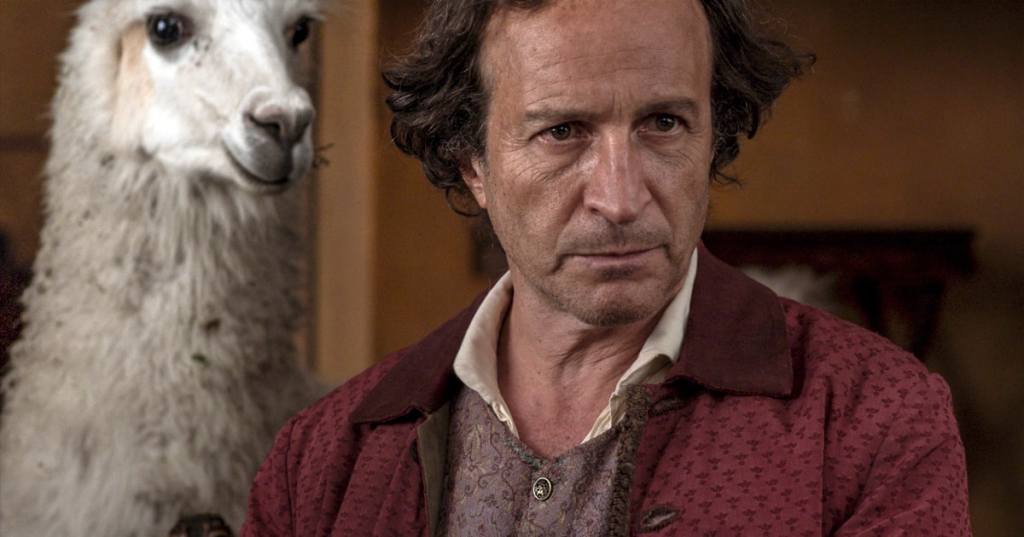
Score
- Gemini, Keegan DeWitt – An unbelievably cool creation, grooving to the same beat of honoring and fully modernizing noir standbys that Gemini itself is operating on while taking even more exciting risks than this already skillful film. Where much of the film impresses as an exercise, Keegan DeWitt’s score is the element that emerges as its most distinct feature, incorporating familiar instruments like that sweet, sweet saxophone that’s often side by side with electronic beats and techno music. The score is moody and unusually textured, incorporating its central themes and instruments just as effectively as it includes one-off motifs. Everything feeds perfectly into Gemini’s distinct atmospherics and amplifies performance beats while further complicating them, like the energizing build-up to a girls night out at a karaoke bar that’s seemingly deflated for Zoe Kravitz as soon as it starts, the score suggesting her character’s brooding thoughts even as the actress looks interested in whatever tune Lola Kirke and Greta Lee are belting out. Weaving smoothly in and out of the film, adding peculiar tones at unexpected moments, it’s a jazzy creation that massively assists its film while standing firmly as its own unique success.
- Thoroughbreds, Erik Friedlander – Angry, volcanic music that’s sparsely incorporated and incredibly affecting. Erik Friedlander’s score fully eschews all of the rich-girl pleasantries Thoroughbreds’ leads are forced to adopt, instead plugging in fully to the repressed, outraged emotions that’ve led Anya-Taylor Joy’s Lily to want to kill her deeply unpleasant stepfather. The film’s controlled sound design certainly helps the score make an impression, rarely appearing during the action of a scene in favor of dropping it into ostensibly mundane sequences of observation and plotting. What makes the contrast land, beyond simply plopping a palpably pissed-off score on top of characters whose resentments are bottled up and inaccessible, is how spiky and weird the compositions and instruments are. Bongos lead the pack of an aggressive, expansive percussion section, accompanied primarily by whirling strings, creepy chanting, and a kinetic electric guitar. The feelings it conjures are too potent to be ignored but also too wild to pin as any one emotion or condition, giving insight to the character’s headspaces without making their motivations easier to pathologize. Excitingly unsubtle and creative work that makes an already smart movie feel richer and harder to pin down.
Costume Design
- Can You Ever Forgive Me?, Arjun Bhasin – I’ve already written about how wonderfully attentive to queerness and class Arjun Bhasin’s costumes are, from Lee’s sweaters and button-ups to Jack’s considerable and flamboyant wardrobe to the dressing of background and one-off characters in the bars and bookshops where everyone so often resides in. These outfits help set up the particular corner of the world that Can You Ever Forgive Me? inhabits so beautifully, as a story of 90’s New Yorkers, mostly gay, mostly literary, trying to get by in a world that might’ve treated them a little better only a few decades ago. The ensembles fit equally as worldbuilding and as evoking character details. Lee’s jackets, for all their different colors, are so similarly cut and textured that she often looks as if she’s wearing the same thing from day to day, always presentable but so unconcerned with her appearance as to buy clothing that would never require her to coordinate her outfit. Still, she’s got a few nicer looks to pull out for a night with Jack or a date with Anna; stuff for special occasions, not a dinner party with her agent, which she attends wearing an untucked shirt and leaves swiping a luxurious coat we never, ever see her wear again. Even after getting a lucrative career, Lee basically wears the same style of clothing, emphasizing her own point that she’s mostly using this new cash to pay her rent. Jack’s outfits are a treat all by themselves, an eclectic ensemble where every look is stylish, though where on Earth does he keep all of it when he doesn’t even have a regular place to stay? Bonus points for giving every one of the booksellers and agents their own styles, and for everything Anna wears on her night out with Lee, from those surprise glasses to her cute pin, and wearing a coat that makes her look even taller than she is.
- The Favourite, Sandy Powell – “Is that . . . . denim?!” I remember gasping at the boyfriend and our friend we’d brought with us, absolutely stunned by the maid’s uniform that Emma Stone puts on about half an hour into the movie. Powell’s always been a genius at plugging into the fashions of a particular era and filtering those aesthetics through the particular visions of the auteurs she collaborates with. Here, she’s fully in sync with Yorgos Lanthimos’ modern take on period loves, treacheries, and pageantries, taking historical cuts and silhouettes while using contemporary fabrics and patterns to craft her outfits. Queen Anne’s long, gorgeous cape is just as eye-catching as any of Rachel Weisz’s shooting suits, exuding some intense butch energy while still looking like something that’d sit in her closet alongside the numerous dresses she owns. All three women have distinct wardrobes within the severe black-and-white color scheme Powell is operating in, getting their own cuts and patterns. Their outfits put them in an exciting visual middle ground, with the cuts and silhouettes of their clothing looking like part of this hermetically sealed world even if their colors contrast it in every possible way. Yes, the costumes of Nic Hoult and the men in court and all of Anne’s attendants are also immaculately made. But we all know why we’re here, and it’s women.
- Zama, Julio Suarez – There’s something so archetypically noble about Zama’s red coat, suggesting the kind of heroic figure he clearly sees himself as/wants to be seen as even when so many of his thoughts and actions clearly undermine this notion. What undoes the magnificence of his red coat further is time, exposing it as one of the only articles of clothing such a high-ranking officer owns and weathering it away over years of hardship long beyond the point of anyone else really seeing it as special. Zama’s costumes are able to delineate just how much wealth and status their wearers have or seek to present through color and pattern and quality of fabric, let alone how worn out and dirty it is, or the sheer existence of more than one outfit. Zama himself has a few different shirts, while each governor of the island has their own, eccentric style that serves as much as a statement on the men’s personalities as well as hinting at changing fashion trends among the noblesse back home that Zama longs to be part of. Every costume, from the many dresses of Lola Duñes to the simple garments of the natives to the vibrantly blue jackets of the messenger slaves who don’t even get real pants, make startling impressions as historically accurate garments while accommodating the surreal accents of this particular story.
Production Design
- Black Panther, Hannah Beachler – Surely the new gold standard for superhero worldbuilding? Wakanda is realized with gorgeous imagination, a plausible take on the very specific civilization it needs to be painted with the broad strokes of a gigantic comic book fantasia. Grandiose locations like the giant waterfall, the underground garden of the purple heart plant, and the throne room are majestic to behold, making indelible impressions despite only a few appearances. Wakanda’s aesthetics and architectural layout is creatively its own in a way that Asgard never is, making a coherent cultural portrait while giving the right flair to specific, vital locations. What steps up Beachler and Hart’s game even further is the equal attention given to the set pieces in the outside world, built just as vividly as any of the tribes in Wakanda. The seedy South Korean casino and the graveyard of planes where Killmonger and Klaue rendezvous is just as memorable as Shuri’s lab. An endless series of achievements that add up to one towering success, where the best detail of all (or maybe just my favorite) might be a fruit crate used as a basketball hoop, one of the most perfect opening images in a year of movies.
- ROMA, Eugenio Caballero and Bárbara Enríquez – A twofold achievement: doing the best job of all Roma’s individual elements at balancing its gargantuan scale while existing as a fully lived-in environment, and visualizing its class dynamics without seeming overdetermined or devoid of personal, eccentric touches. Sra. Sofía’s house is a seemingly endless space, from the giant rooftops where Cleo hangs laundry to that hilariously narrow driveway, yet every room feels like part of the same building. It’s also just as much a home as Cleo’s tiny one-room with Adela, each place personalized by the trinkets and routines of their inhabitants. The recreation of 1970’s Mexico City is a stunning achievement, immaculately evoking its era with the hundreds of shops and exteriors and cars that look as though they were plucked out of a photograph, even when making locations like a movie theater or a hospital exterior seem overwhelming without breaking faith with Roma’s heightened realism. These flourishes can even throw in a few oddball props, as with the gigantic crab statue that casts a weirder post-life-changing-conversation vibe while sitting in the background of Cleo, Sofía, and her kids eating ice cream than the bluntly ironic wedding party happening on the edges of the frame. A feat of period immersion that’s so intricate and expansive I could’ve listed a dozen more locations and still had plenty of choice, expertly made rooms to go around. Favorite detail: that tattered bedside lampshade at the hotel where Cleo and Fermín go.
Makeup & Hairstyling
- Vice, Greg Cannon, Kate Biscoe, and Patricia Dehaney – I get the point that Vice’s makeup jobs aren’t quite striving for historical accuracy outside of Christian Bale’s justly lauded transformation, going for approximations of Colin Powell and Donald Rumsfeld that are just as much about “look at how Tyler Perry and Steve Carell are playing these fucks!”. Admittedly, the seriocomic tone and aggressive, “let these celebrities teach you about this shadowy man even we don’t really know” conceit gives it some leniency to ride that line – though Sam Rockwell’s makeup as W. seems the most newspaper-caricature makeup job of the bunch. Still, what I’m most impressed by about the Vice makeup is how the team, for all their dramedic license with historically accurate facials, handle aging a whole host of characters across decades. Cheney’s hair goes from brown to white, thinning to nothing on the top but still full where he has it, while Rumsfeld’s keeps a little more and changes shades of gray. Lynne’s weight gain, visible in her arms and face, stands as a pretty stunning success considering how many biopics start and stop their Aging of The Great Man’s Wife checklist at giving her an Older Woman Wig. Everyone gets liver spots and crows feet and hair loss and extra pounds that build up the way they would on a real person, grounding an endlessly arch tone in the realistically aging bodies of so many white bastards fighting tool and nail for unchecked power.

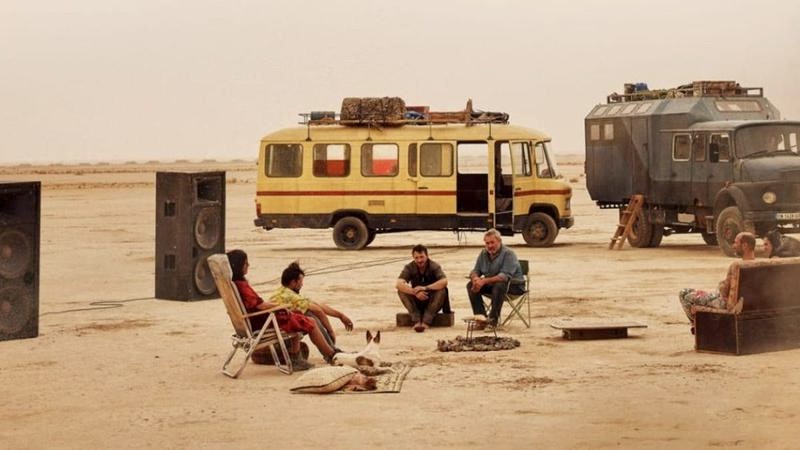

 It's Just Like The Movies
Leave a comment